

Which Antminer Models Are Compatible With Liquid Cooling Cabinets?

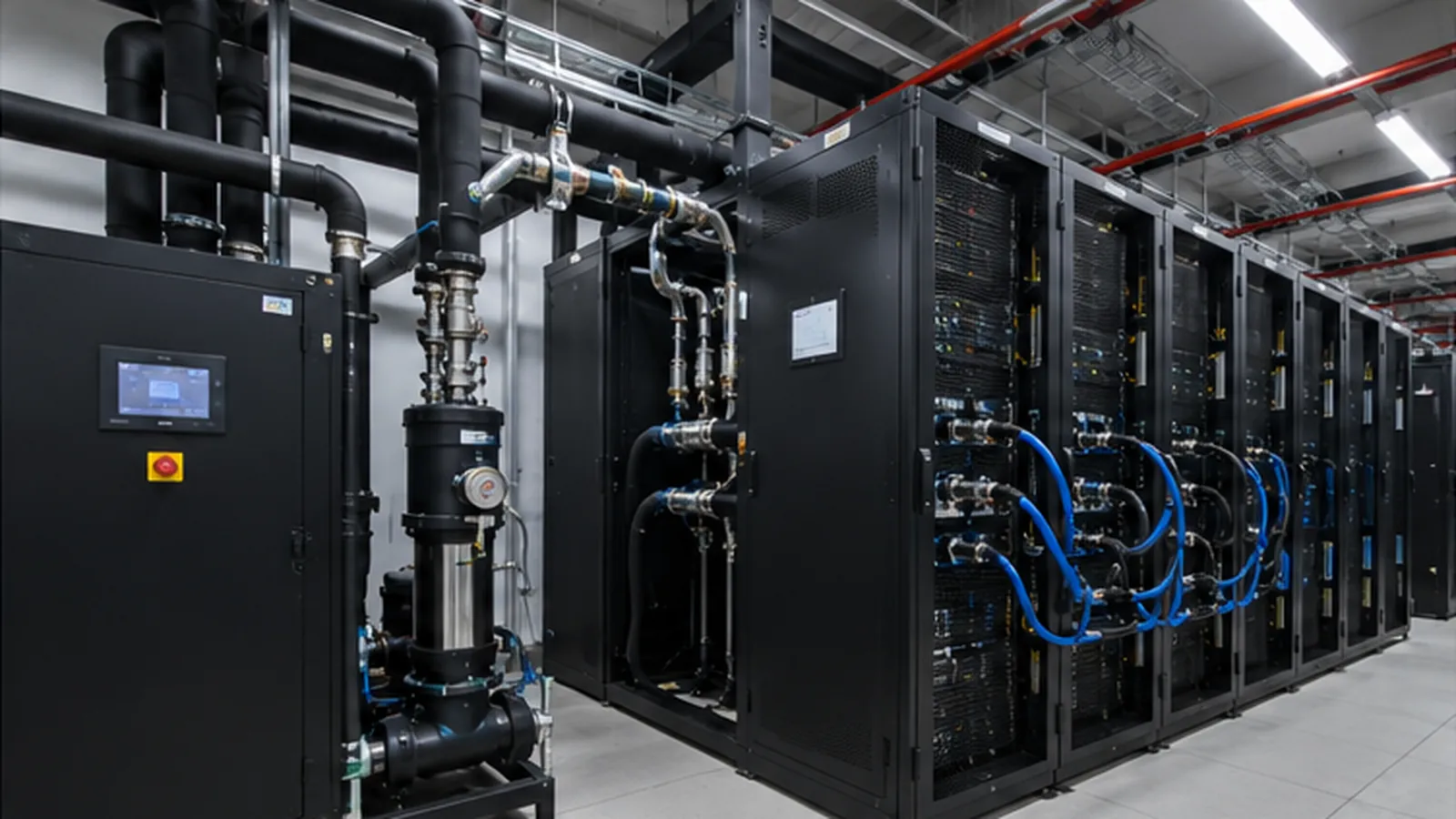
The question is normally asked as though a liquid cooling cabinet carried a list of approved miners. It does not. A cabinet presents three interfaces to the miners installed in it, and only one of the three is decided by the cabinet.
Understanding which interface governs which part of the answer is what makes it possible to specify a cabinet against a fleet that already exists, or one that will be replaced during the life of the installation.
Contents
- The three interfaces
- The bay, and why it is rarely the constraint
- The cold plate, where the answer actually lies
- The hydraulic interface
- What the published range assumes about your miners
- Factory hydro miners and converted miners
- What to confirm before ordering
- Questions
The three interfaces
| Interface | What it determines | Decided by the cabinet? |
|---|---|---|
| Bay and mounting | Position, footprint, weight support | Yes, and it is common across the range |
| Cold plate | Heat capture from the hash boards | No. Specific to the miner model and version |
| Hydraulic connection | Coolant flow, pressure, permitted inlet temperature | No. Set by the miner and the plate fitted to it |
Two cabinets in the same family will accept the same miner. Two miners that share a bay dimension may not both be serviceable by the same cold plate, and may not both be satisfied by the same loop.
This is the reason a compatibility answer that names models without naming the cold plate and the hydraulic requirement is incomplete, whichever supplier gives it.
The bay, and why it is rarely the constraint
Within the Antminer cabinet and rack range the bay is a repeating unit. Published installed capacity runs from 12 positions in the smallest cabinet to 308 in the container, with the figure rising in steps across the range.
| Product | Positions | Installed power load | Power per position | Weight |
|---|---|---|---|---|
| 3U 13-position rack-mount unit | 13 | 143 kW | 11.0 kW | 230 kg |
| 12-position cabinet | 12 | 66 kW | 5.5 kW | 350 kg |
| 20-position cabinet | 20 | 110 kW | 5.5 kW | 150 kg |
| 24-position cabinet | 24 | 132 kW | 5.5 kW | 170 kg |
| 28-position cabinet | 28 | 154 kW | 5.5 kW | 230 kg |
| 36-position cabinet | 36 | 198 kW | 5.5 kW | 322 kg |
| 110-position rack | 110 | 605 kW | 5.5 kW | 3,000 kg |
| 240-position rack | 240 | 1,320 kW | 5.5 kW | 3,800 kg |
| 308-position container | 308 | 1,694 kW | 5.5 kW | 9,200 kg |
The bay itself does not decide compatibility. What the table does show is the electrical load each cabinet is dimensioned to carry, and that figure is the first comparison to make against a fleet, because it is published rather than assumed.
The cold plate, where the answer actually lies
Cold plate cooling removes heat by conduction. The plate has to sit against the hash board at the correct pressure, over the correct area, with its ports in the correct positions. That geometry follows the board layout, which changes between models and between versions of the same model.
Two situations follow from this, and they are not equivalent.
For an air-cooled miner, conversion means fitting a cold plate kit. Availability is determined per model and per version, not per brand, and the kit is a component in its own right with its own flow and pressure characteristics.
For a miner supplied as a hydro unit, the plates and manifold are fitted at the factory and the miner’s own published specification states the flow, inlet temperature and pressure it requires. Nothing is being added; the cabinet only has to accept the manifold and meet those figures.
The second situation is documented by the miner manufacturer. The first is not, because the manufacturer did not build it that way. Some of the information for a converted unit comes from the plate supplier and some has to be established by measurement on site.
One point deserves attention before an order rather than after it: converting an air-cooled miner normally affects the miner manufacturer’s warranty. The position should be established in writing for the specific model and version concerned, because it is a commercial risk carried by the site rather than by the cooling supplier.
The hydraulic interface
The cabinet range publishes four hydraulic figures, and they are consistent across every product in it.
| Parameter | Published value |
|---|---|
| Coolant circulation demand, single machine | ≥ 0.5 m³/h |
| System pipeline pressure | 0.2 – 0.4 MPa |
| Operating temperature range of the system | 22 – 42 °C |
| Core piping material | 304 stainless steel seamless pipe |
The per-machine flow figure is quoted as a minimum, and the loop requirement scales with the number of positions installed.
| Positions | Total coolant circulation at ≥ 0.5 m³/h per machine |
|---|---|
| 12 | ≥ 6 m³/h |
| 24 | ≥ 12 m³/h |
| 36 | ≥ 18 m³/h |
| 110 | ≥ 55 m³/h |
| 240 | ≥ 120 m³/h |
| 308 | ≥ 154 m³/h |
Where the intended miners require more than 0.5 m³/h each, or a lower inlet temperature than the published system range, both the loop flow and the heat rejection terminal have to be recalculated for the actual position count. That is the same assessment as a retrofit project, and it is set out component by component in our guide to hydro mining cooling system upgrades.
Heat rejection terminals are selected on the same basis. A dry cooling tower is the usual choice where water is scarce or the site is remote; a closed cooling tower is more efficient where water is available.
What the published range assumes about your miners
Reading the published figures across the whole range produces a pattern that is worth knowing before a specification is written.
From 12 positions to 308 positions, every product is dimensioned at 5.5 kW per position. The arithmetic holds at both ends: 12 positions at 66 kW, and 308 positions at 1,694 kW. The range has been designed around a defined class of machine, and that class is stated by the numbers rather than by a model list.
One product departs from the pattern. The 3U 13-position rack-mount unit is published at 143 kW over 13 positions, which is 11 kW per position, twice the rest of the family.
The reason appears to be the enclosure format rather than the cooling system. A 3U position is a fixed low-profile slot rather than a full-height cabinet position, so the unit is dimensioned for miners that deliver more power within a smaller envelope. The design point is a machine of a different class.
The practical consequence is straightforward. A fleet near 5.5 kW per machine sits inside the published dimensioning of the cabinet and rack range. A fleet above that figure needs the specification confirmed against the actual number rather than extrapolated from the position count, and the 3U 13-position unit is the product in the published range that is already dimensioned at 11 kW per position.
A second figure from the same specifications is useful for operating cost. Circulating pump power is published from 2.2 kW on the 12-position cabinet to 44 kW on the 308-position container, which is between 1.8% and 3.3% of installed IT load across the range. That is in-cabinet circulation only; the outdoor heat rejection fans are additional.
Factory hydro miners and converted miners
Two fleets can occupy identical bays and still behave differently in the same loop.
A factory hydro miner arrives as a component of the cooling system, with published limits on flow, inlet temperature and pressure. The loop has to meet them, and the specification is a comparison of two published sets of figures.
A converted miner has limits that are partly documented and partly established by measurement. Its acceptable inlet temperature and flow are not stated by the miner manufacturer, because the configuration is not one the manufacturer supplied.
Where a site runs both, the loop has to satisfy the stricter of the two requirements, and the flow balance across positions becomes the governing problem rather than the bay count. Mixing is workable and common, particularly during a fleet changeover, but it is an engineering decision that has to be taken before the positions are populated.
What to confirm before ordering
A definitive answer for a specific fleet rests on the following inputs. They settle the question in one exchange, and they are the same inputs a retrofit assessment requires.
For each miner model and version:
- Rated power and maximum power at the intended operating mode
- Required coolant flow
- Permitted inlet temperature
- Permitted operating pressure and pressure drop
- Approved coolant
- Whether the unit is factory hydro, or air-cooled and to be converted, and by whom
- Warranty position after conversion, where conversion applies
For the site:
- Intended position count, and the expansion planned within the life of the installation
- Design ambient condition
- Heat rejection route: dry cooler, closed cooling tower or integrated cooling station
- Available power, and whether the cooling plant sits indoors or outdoors
Requests can be submitted through our contact form. Solution documents for each product, including the container and rack configurations, are available in the download center, and commissioning, training and spares for overseas sites are covered by our full lifecycle service.
Questions
Which Antminer models can be installed in a liquid cooling cabinet?
The cabinet supplies the bay and the loop. Whether a specific model can be run in it depends on the cold plate fitted to that model and on the flow, inlet temperature and pressure that model requires. Both are specific to the model and version, and both are confirmed against the miner’s published specification at quotation stage.
Can an air-cooled Antminer be converted to liquid cooling?
Yes, by fitting a cold plate kit. Availability is determined per model and version. The conversion normally affects the miner manufacturer’s warranty, and that position should be established in writing before an order is placed.
How much coolant flow does each miner need?
The published figure across the cabinet range is a minimum of 0.5 m³/h per machine. Where the intended miner requires more, the total loop flow and the heat rejection capacity are recalculated against the position count and the design ambient condition.
What temperature and pressure does the system operate at?
The published system range is 22 to 42 °C, with pipeline pressure between 0.2 and 0.4 MPa. The core piping is 304 stainless steel seamless pipe, and the circuits are pressure tested before dispatch.
How much power does the cooling system itself consume?
Published circulating pump power ranges from 2.2 kW on the 12-position cabinet to 44 kW on the 308-position container, which is between 1.8% and 3.3% of installed IT load. Outdoor heat rejection fans are additional to that figure.
Can different Antminer models be mixed in one cabinet?
Where the hydraulic requirements of every model concerned are known and the loop is dimensioned for the strictest of them, mixed fleets are workable. The constraint is normally the flow balance across positions rather than the bay itself.
Method and sources. The position counts, installed power loads, per-machine flow requirements, system pressure and temperature ranges, circulating pump powers and weights quoted above are taken from the published specifications of the corresponding products in our Antminer cabinet, rack and container range. Cold plate availability and the effect of conversion on a miner manufacturer’s warranty are determined per model and are not published as a general list; both are confirmed against the specific miner at quotation stage.