

Mining Farm Cooling Design for Hot Climates

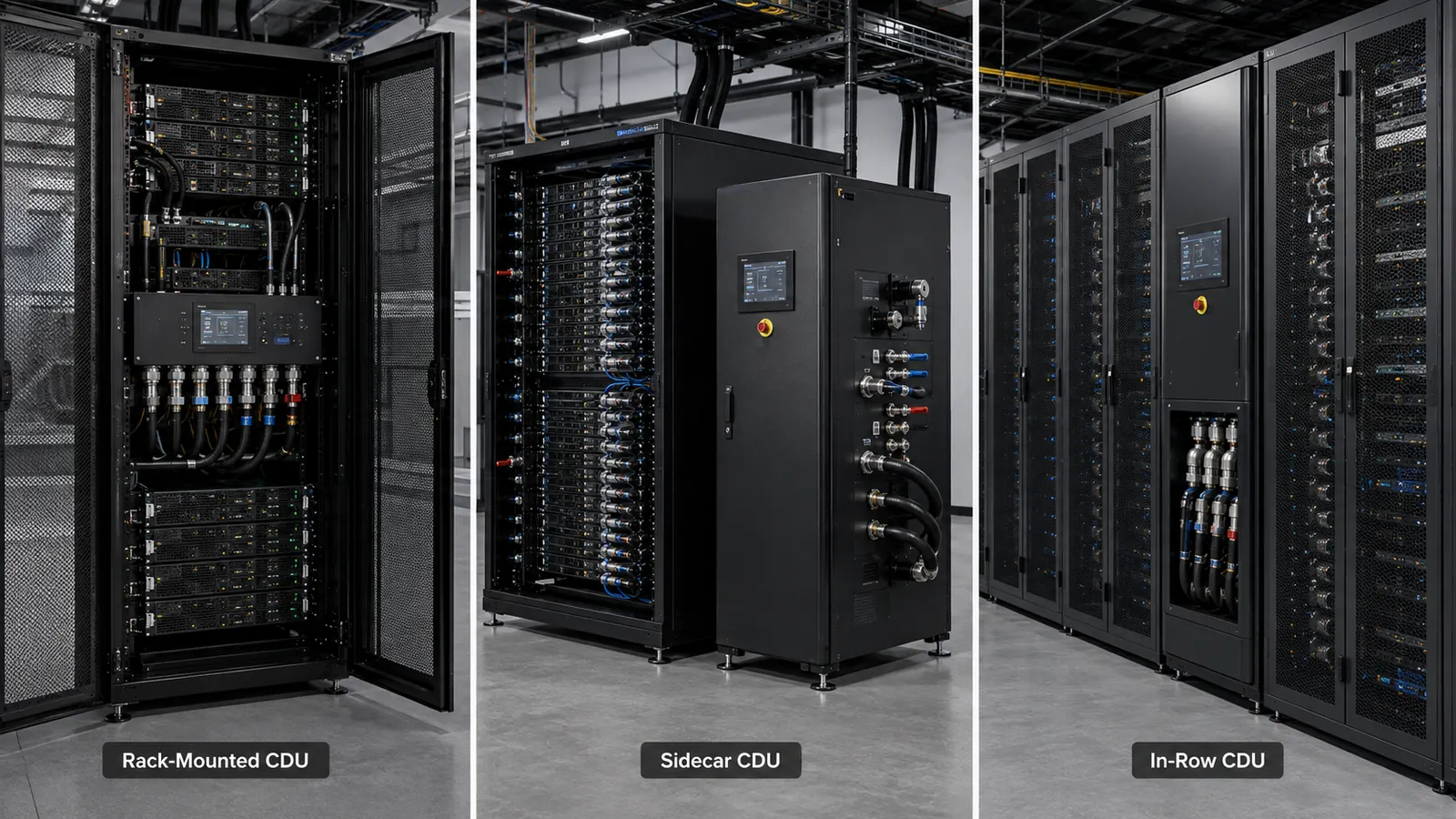
When air-cooled miners throttle or shut down during the hottest hours, increasing room airflow does not remove the underlying limit: the intake air is already too warm to carry away the miner heat. The cooling design needs to move that heat out of the mining area through a controlled liquid circuit and reject it outdoors at the site’s peak temperature.
For liquid-cooled ASIC miners, we use this heat path:
Miner cold plate → primary coolant loop → CDU heat exchanger → secondary loop → dry cooler or cooling station
The liquid-cooled container holds the miners and circulation equipment. The CDU transfers heat between the miner-side and heat-rejection circuits. The dry cooler rejects heat to outdoor air. When outdoor air is too hot to maintain the required coolant temperature, the cooling station provides mechanical refrigeration.
Which miners can run in a liquid-cooled container?
The container must be matched to miners designed for liquid cooling. A water-cooled ASIC transfers chip heat through cold plates into the coolant. An air-cooled model cannot be connected to the liquid circuit unless the miner manufacturer or a validated conversion system provides compatible cold plates, flow requirements and operating limits.
We configure mining containers around the miner model, required positions, per-machine power and coolant demand. The Antminer 480-position 40HQ liquid-cooled container integrates miner positions, cooling circulation, power distribution and controls. Its dual-loop, dual-CDU arrangement separates the left and right sides so each circulation section can operate independently.
This separation is useful in a large installation because a single circulation section does not define the operating state of the entire container. The control system monitors temperature, pressure and flow; optional smart management adds remote monitoring, leak warnings and energy analysis. Operators can use these readings to identify abnormal circulation or heat rejection before miner alarms become the only indication of a problem.
How does heat move from the miners to the outdoor equipment?
The miner-side coolant absorbs heat at the cold plates and returns warm to the CDU. Inside the CDU, a plate heat exchanger transfers that heat to the secondary circuit while keeping the two water circuits separate. The secondary loop then carries the heat to the outdoor cooling equipment.
We use this primary-secondary arrangement to keep the miner-side coolant circuit separate from the external heat-rejection circuit. The pump and piping design must deliver the required flow through the actual circuit, including cold plates, hoses, manifolds, valves and heat exchangers. A pump’s maximum-flow figure does not show its delivered flow after system resistance is applied.
In a container with dual loops and dual CDUs, we size each side for its assigned miner load and verify the circulation duty at the operating pressure. If the miner branches do not receive their required flow, adding outdoor cooling capacity alone will not correct the restriction.
How does the dry cooler reject heat in a hot climate?
Our dry cooler receives warm water from the secondary loop and transfers its heat to outdoor air through finned coils and EC axial fans. In dry-cooling mode, the water remains in a closed circuit and the unit rejects heat without evaporative water consumption.
We configure dry-cooler capacity from 50 kW to 2,000 kW per unit, with parallel units for larger loads. Variable-speed EC fans adjust airflow to the heat load and outdoor temperature. The dry-cooler design can be configured for ambient conditions up to 50°C, with coil area, fan arrangement and connections selected for the project’s duty.
In a desert or tropical site, the critical design point is the hottest outdoor condition, not the annual average. As outdoor air temperature rises, the dry cooler has less temperature difference available to cool the return water. We therefore match the cooler to the required secondary-loop supply temperature at the site’s peak ambient temperature.
When dry cooling alone cannot maintain the specified water temperature during peak heat, we configure a water-curtain or spray assembly to provide evaporative assistance. This creates a dry-wet hybrid system and introduces water use. It is a separate operating mode from dry-only cooling, so water availability and treatment requirements must be built into the site design.
When do we add the integrated cooling station?
When the dry cooler cannot deliver the required coolant temperature at the site’s peak outdoor temperature, we add mechanical refrigeration to the secondary loop. Our integrated cooling station combines compressor refrigeration, pump circulation and intelligent control.
During high-temperature operation, the compressor cools the secondary-side return water before it is sent back toward the CDU. When outdoor conditions allow the dry cooler to meet the required duty, the control system switches to natural cooling and stops the compressor. The system therefore uses active refrigeration for the hot operating period and dry cooling when ambient conditions are suitable.
The station’s pump module handles circulation, pressure stabilization and water replenishment. Its heat-exchange connection to the CDU separates the primary miner loop from the secondary heat-rejection loop. We configure the cooling station and dry cooler as one coordinated system so that the selected operating modes meet the required coolant conditions.
Compressor and pump power must be included in the site electrical load. For mining farms where power capacity is fixed, the design needs to account for miners and cooling equipment together rather than allocating the full connection capacity to ASICs.
How is the equipment arranged for a complete mining farm?
We integrate the miner positions, cooling loops, CDUs, power distribution and control functions in the liquid-cooled container. The secondary loop connects the CDU to the outdoor dry cooler. Where the peak outdoor temperature exceeds the dry cooler’s duty, the integrated cooling station connects to the same heat-rejection path and provides mechanical cooling.
| Equipment | Function in the cooling path | Design responsibility |
|---|---|---|
| Liquid-cooled miner | Transfers chip heat through cold plates into the coolant | Verify model compatibility, operating power and coolant requirements |
| Container loop and CDU | Circulates miner-side coolant and transfers heat to the secondary loop | Match flow, pressure drop, loop separation and assigned miner load |
| Dry cooler | Rejects secondary-loop heat to outdoor air | Size for peak ambient temperature and required water temperatures |
| Integrated cooling station | Provides compressor cooling when dry cooling cannot meet the duty | Match refrigeration capacity, pump duty, power supply and control modes |
The 480-position container configuration uses dual circulation loops and dual CDUs as part of this integrated arrangement. We select the external heat-rejection equipment for the project’s total heat load and climate conditions; the container’s bay count alone does not determine how much heat the complete site can reject.
What determines cooling performance during the hottest hours?
During hot-weather operation, we use the coolant supply and return temperatures, loop flow, pressure and outdoor temperature to identify the system’s limiting component. A rising miner inlet temperature with low branch flow points to a circulation or hydraulic restriction. Adequate flow with rising return temperature indicates that the heat exchanger or outdoor heat-rejection stage needs review.
The dry cooler’s fan speed responds to heat load and ambient conditions. If the coolant supply target cannot be maintained at the peak outdoor temperature, the cooling station must be available to provide refrigeration. If the hybrid spray option is installed, its water supply and control sequence must also be ready for the high-temperature operating mode.
We configure monitoring around these operating values so the control system can regulate the cooling equipment and alert operators to abnormal conditions. Temperature alone is not sufficient for diagnosis; flow and pressure readings show whether heat is being carried through the circuit at the required rate.
What information is required to configure hot-climate mining cooling?
We use the following project information to match container, circulation and heat-rejection equipment:
- Miner model, liquid-cooling compatibility, quantity and power per miner
- Required coolant supply and return temperatures
- Required flow per miner and total system flow
- Pressure drop through cold plates, hoses, manifolds and piping
- Site peak outdoor temperature and altitude
- Water availability if dry-wet hybrid cooling is required
- Available electrical capacity for miners, pumps, fans and compressors
- Required operating redundancy and monitoring functions
For an existing farm, we also review the current pump duty, piping layout, CDU or heat exchanger, dry cooler performance and operating records. We retain components that meet the new duty and identify the specific equipment that limits the proposed load. The existing miner count or container position count is not enough to establish that the system can support a higher heat load.
Cooling design for tropical and desert mining farms
For compatible liquid-cooled miners, we transfer chip heat through cold plates, circulate it through the container’s dual-loop/CDU arrangement and reject it through dry coolers. Where the site’s peak outdoor temperature prevents dry cooling from meeting the required coolant conditions, the integrated cooling station supplies compressor refrigeration. Where water is available and the design requires additional peak-temperature support, the dry-wet hybrid option adds evaporative assistance.
We size the container, CDU, pumps, dry cooler and cooling station against the same miner load and site design temperature. This connects each equipment function to a defined part of the heat path and gives the mining farm a cooling system configured for its actual hot-climate operating conditions.