

The ultimate symphony of AI and blockchain: How can liquid-cooled containers carry the ambition of “decentralization”?

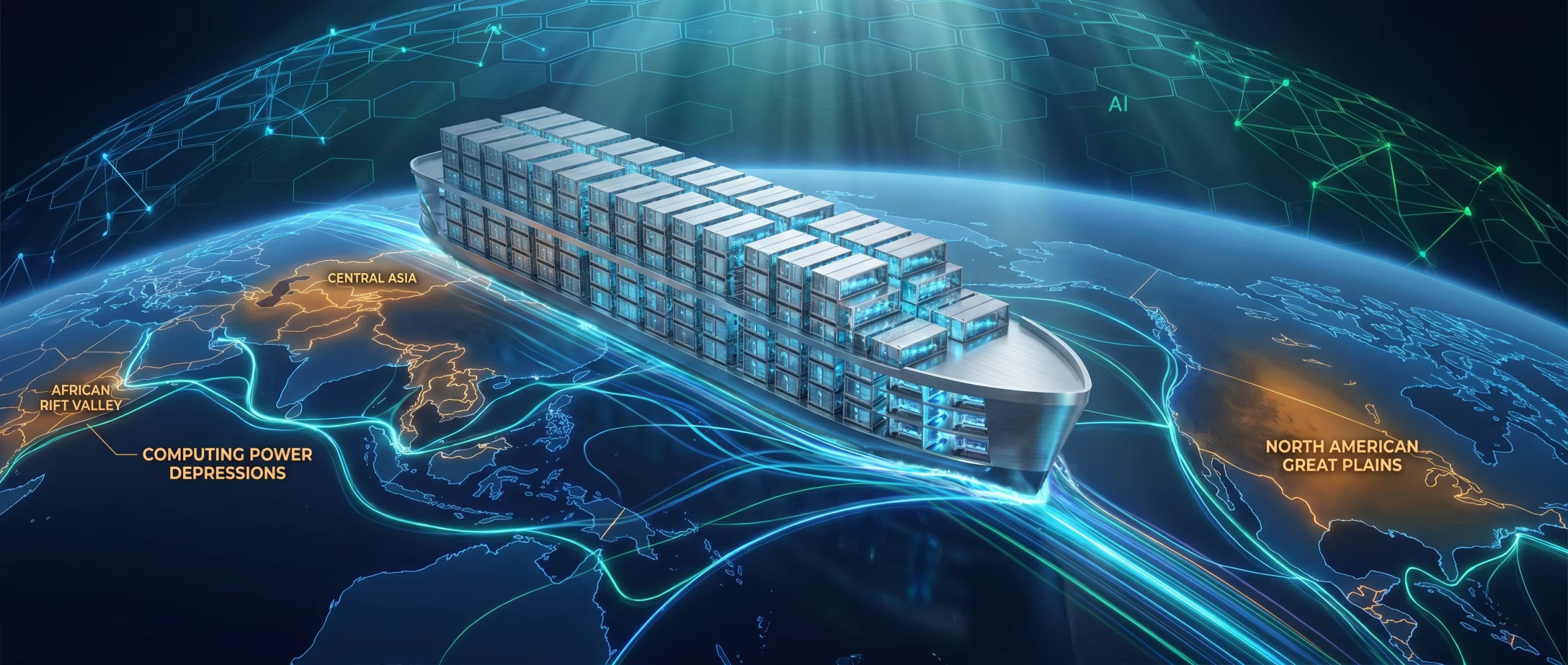
In 2026, computing power will no longer be cold numbers, but a fluid guarantee for “digital survival”.
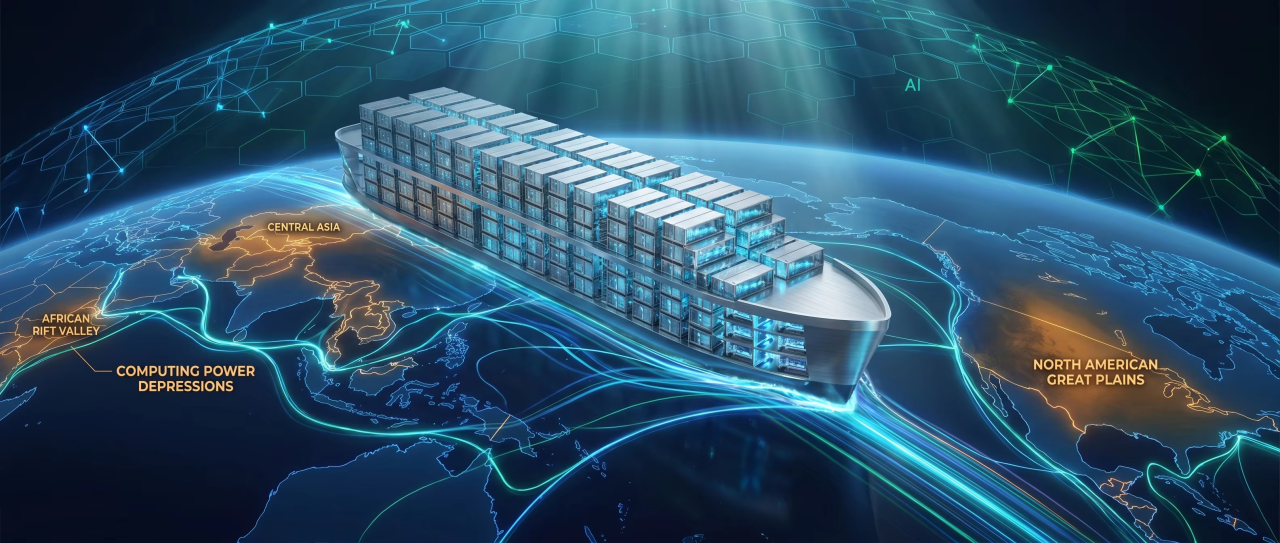
With the deep integration of artificial intelligence (AI) and blockchain in the DePIN (which can be understood as a “shared hardware network,” similar to a computing power version of bike-sharing or Airbnb) model, a magnificent “great migration of computing power” is unfolding across the globe. In search of lower-cost and more stable energy, computing centers are moving at an unprecedented speed to the deserts of Central Asia, new energy cities in Africa, and the open plains of North America.
In this global voyage of computing power, how can top-tier chips remain cool in extreme environments? Xinke LCS, known as the “Digital Noah,” provides a survival guide for global computing infrastructure in extremely cold conditions through modular liquid-cooled containers.
Computational Geography: Global Migration in Search of “Energy Depressions”
In the traditional landscape of computing power, data centers are often located in bustling urban areas. However, driven by this shared hardware model, computing geography is being reshaped.

This distributed sharing mechanism breaks down physical boundaries, leading to a concentration of computing power nodes in “power-conserving low-lying areas.” In the Rift Valley of Ethiopia and the Gobi Desert of Uzbekistan, inexpensive clean energy (hydropower, geothermal, and solar) awaits conversion. However, the natural environments in these regions are extremely harsh:
• Extreme Heat Challenges: Ambient temperatures consistently exceed 40°C, causing traditional air-cooling systems to become drastically inefficient at high temperatures, leading to chip frequency reduction or even damage.
• Physical Damage: Dust storms and extreme temperature variations are the “enemies” of delicate electronic components.
• Infrastructure Shortages: A lack of large-scale civil engineering data centers necessitates the development of standardized, “plug-and-play” infrastructure.
Noah’s Ark: Cooling down a 1400W “beast” in the desert
By 2026, computing hardware will have entered an era of “black hole-level” energy consumption.
The new generation of chips, represented by NVIDIA Blackwell Ultra (B300), has a single chip power consumption (TDP, equivalent to a high-power electric heater) exceeding 1400W. This means that a fully loaded GB300 NVL72 server rack requires a cooling capacity of 150kW-155kW. In areas with scarce water resources or harsh environments, traditional air-cooled towers or civil engineering server rooms can no longer support such energy density.
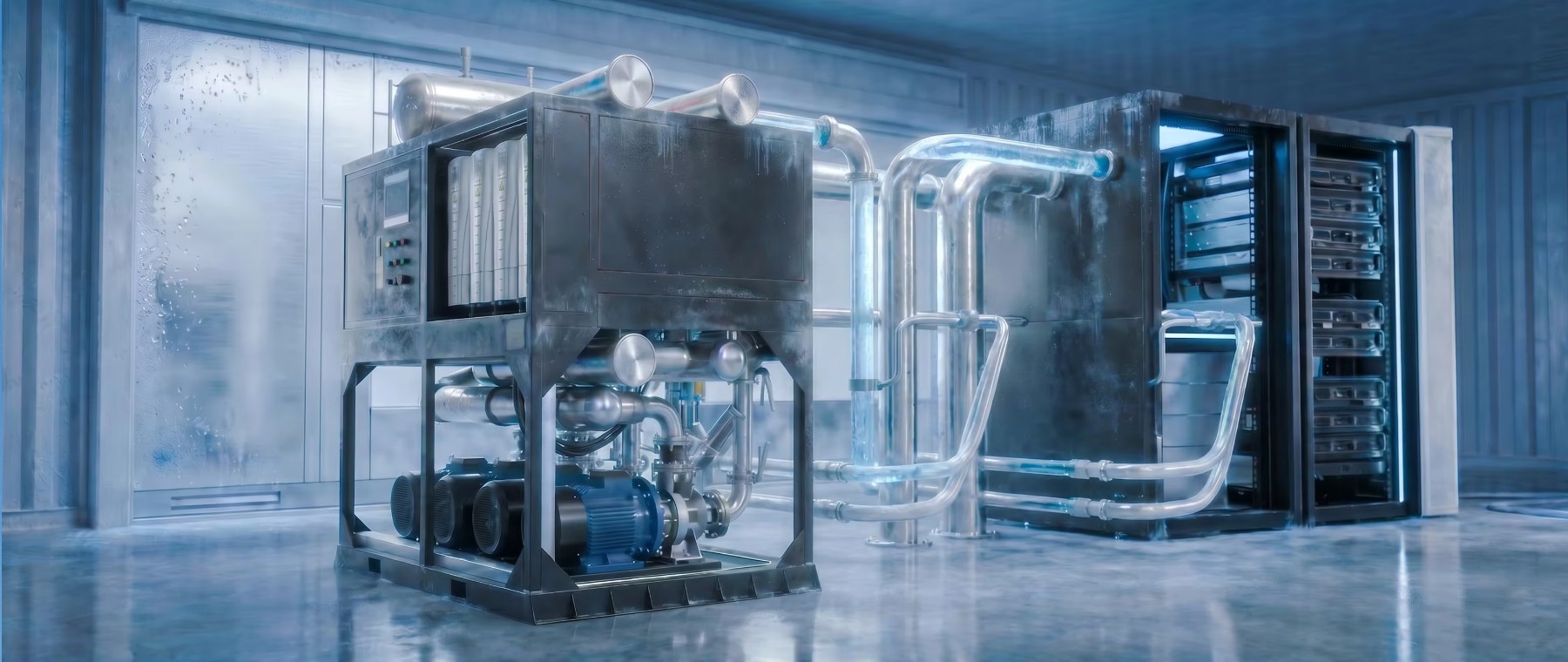
Silicon Labs’ intelligent modular liquid-cooled container, like a fully enclosed “digital Noah,” is designed for extreme environments:
1. Extreme Temperature Control: Utilizing a fully liquid-cooled architecture and a self-developed CDU, even in scorching heat, the core temperature difference is precisely controlled within <1°C, ensuring top-tier architectures like Blackwell operate at full load without throttling.
2. Physical Protection: The container boasts IP55 protection, coupled with a “water and electricity isolation” design and fully laser-welded piping, completely isolating dust, moisture, and static electricity from the precision hardware.
3. Extreme Energy Efficiency: Even in hot climates, the Power Usage Effectiveness (PUE) (a value closer to 1 indicates greater energy savings) remains consistently <1.15. Compared to traditional solutions, this represents a significant improvement in energy efficiency, converting every kilowatt-hour of cheap electricity into highly efficient computing power.
From Tangshan to the World: Defining Delivery Standards with “Source Factory”
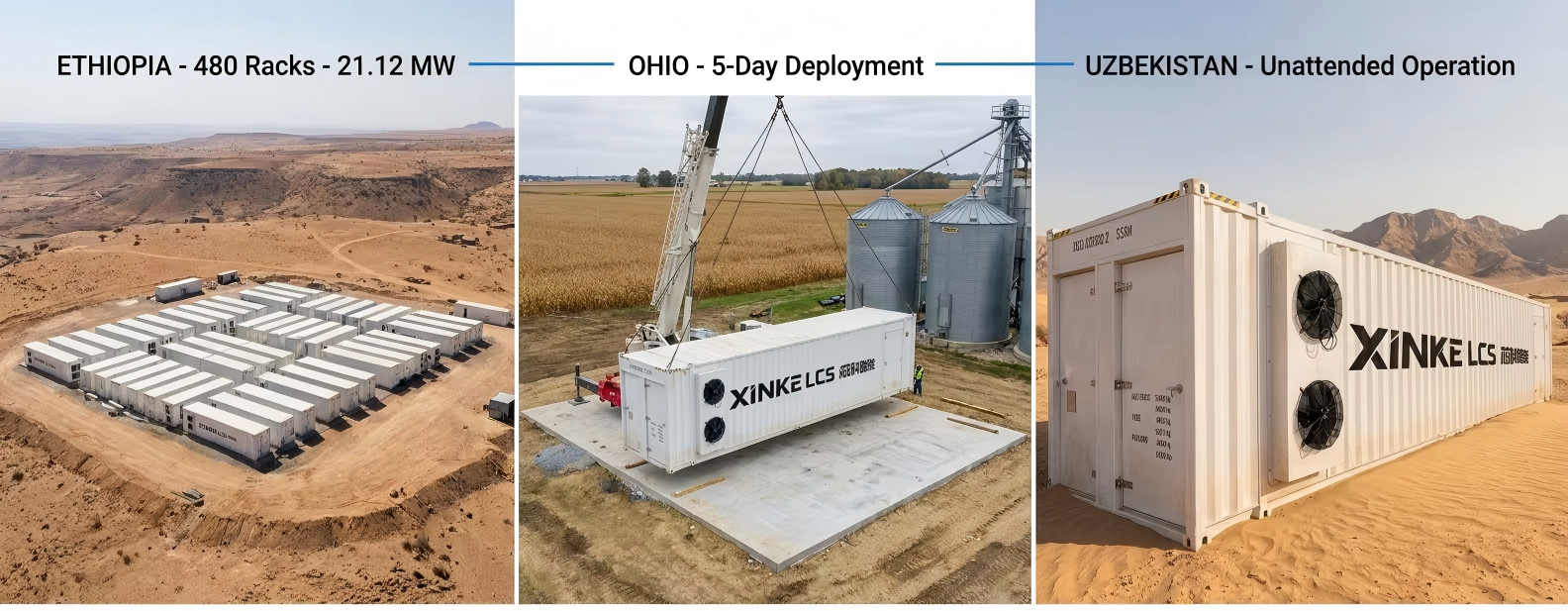
Starting from its 30,000-square-meter intelligent manufacturing base in Guye, Tangshan, Hebei Province, Silicon Labs’ “Computing Ark” has sailed to more than 30 countries worldwide:
• In Ethiopia: We delivered a high-density liquid-cooled container cluster with 480 bays, totaling 21.12MW of installed capacity, becoming a new benchmark for local computing infrastructure.
• In Ohio, USA: Modular containers achieved single-container commissioning and deployment within 5 days, significantly shortening the return on investment cycle.
• In Uzbekistan: Facing extremely dry, hot, and sandy environments, Silicon Labs’ customized solutions achieved stable, unattended operation.
We not only provide hardware, but also a global perception system based on XINKE SMART, enabling cloud-based management and leak warning for nodes located overseas.
Mission: To make computing power more efficient and energy greener.
The future of computing power is a competition for intellectual computing sovereignty, and even more so a contest of energy efficiency.
Silicon Labs remains committed to its vision of “Digital Noah”: to build the most robust computing power haven in the places with the most abundant energy. Whether it’s the 90% server waste heat recovery technology or the rapid deployment response to this wave of distributed computing power construction, we are always dedicated to:
“Make computing power more efficient, make energy greener.”
In this new journey of digital civilization, the computing power ark is ready to set sail.
Xinke LCS
Hotline: 400-106-2272
https://shorturl.fm/Coyjl
https://shorturl.fm/OYNa0
https://shorturl.fm/QkVOY
https://shorturl.fm/Y8JZA
https://shorturl.fm/BahB5
https://shorturl.fm/uTKJu
https://shorturl.fm/TZ3Un
https://shorturl.fm/aQp3B
https://shorturl.fm/uoXfR
https://shorturl.fm/RZY1Z
https://shorturl.fm/vYjW4
https://shorturl.fm/gnC3S
https://shorturl.fm/gS4Iu
https://shorturl.fm/zCVPL
https://shorturl.fm/UG7zi
https://shorturl.fm/u8S7D
https://shorturl.fm/fs6B2
https://shorturl.fm/jDGh4
https://shorturl.fm/muIiP
https://shorturl.fm/naryr
https://shorturl.fm/0PrFW
https://shorturl.fm/z1dAu
https://shorturl.fm/lcCCl
https://shorturl.fm/rnUf4
https://shorturl.fm/Qk2k3
https://shorturl.fm/szEli
https://shorturl.fm/lyae9
https://shorturl.fm/Eelkw
https://shorturl.fm/4kthl
https://shorturl.fm/Puqqc
https://shorturl.fm/yzLmI
https://shorturl.fm/n4sjM
https://shorturl.fm/lN8kU
https://shorturl.fm/JQnHU
https://shorturl.fm/sRv5X
https://shorturl.fm/hOETF
https://shorturl.fm/NIU9c
https://shorturl.fm/0yVLH
https://shorturl.fm/rILov
https://shorturl.fm/vDBUM
https://shorturl.fm/j5tVn
https://shorturl.fm/hyObr
https://shorturl.fm/LEAPm
https://shorturl.fm/Kk9xk
https://shorturl.fm/FgEqD
https://shorturl.fm/uKs4P
https://shorturl.fm/bSCCr
Bài chia sẻ chất lượng. Ai đang tìm hiểu du học Hàn Quốc có thể liên hệ Letco — hỗ trợ chọn ngành, học bổng và thủ tục visa nhanh gọn. Chi tiết ở letco.vn.
Slightly off-topic, but worth it. If you open https://fphd.hyw2owqx.cc/, you’ll get a well-organised careers platform — both local and remote work you can dig through without the clutter. Would love to hear if others have used it too?
Whenever someone I know is looking for work, I point them to https://loof.soccerlist.online/. It’s a listings platform where the search actually works — narrow down by salary and title without the hassle.
[145588]supplies professional anti-violence equipments and solutions for the whole world with strong and perfect production capacity. anti-violence.org
Appreciate the details here. Came across bfstphukdv.top recently and it lines up well with this.