

Liquid Cooling vs Air Cooling Cost for High-Density Data Centers

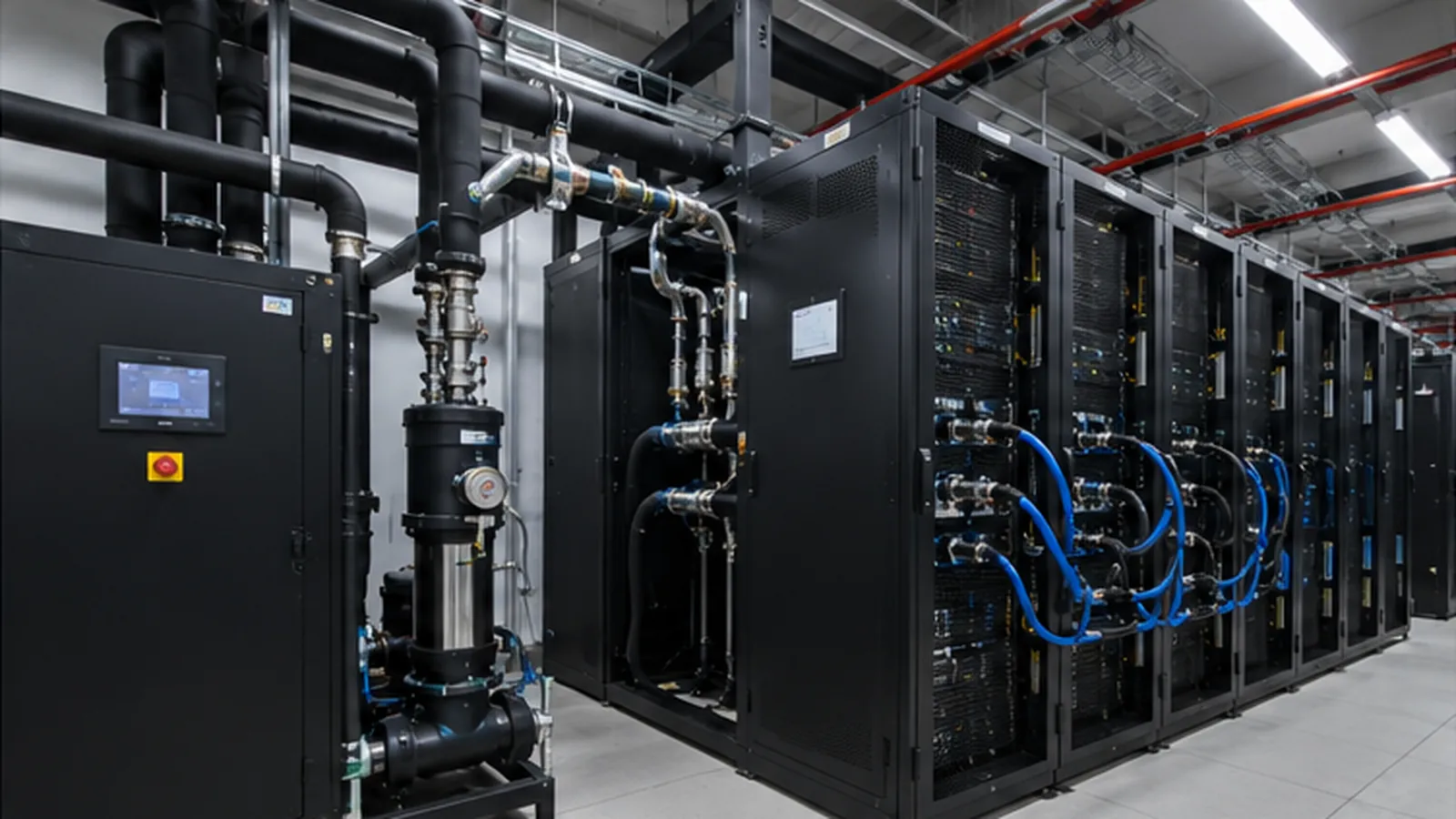
At moderate rack densities, air cooling can still be the lower-cost option—especially when the building already has spare CRAH, chilled-water and electrical capacity.
The economics change as AI and HPC racks become denser.
At that point, comparing the price of a CDU with the price of a CRAH tells you very little. The real question is:
Which architecture delivers the required compute capacity at the lower total cost over the life of the facility?
A useful comparison should include:
Cooling equipment + electrical overhead + rack count + white space + server fan power + heat rejection + maintenance + retrofit work + future expansion
The answer will not be the same for every project.
1. Compare the Same Compute Requirement First
Before comparing cost, make sure both designs support the same workload.
A fair comparison should use the same:
- GPU/CPU quantity;
- useful compute capacity;
- redundancy level;
- expected utilization;
- project life;
- site climate.
This matters because server cooling power is not always accounted for in the same place.
In an air-cooled server, internal fans are normally counted as part of IT power. A direct-to-chip design may reduce some of that fan demand while adding pumps elsewhere in the cooling system.
If one proposal is compared by total IT MW and another by usable computing capacity, the result can be misleading.
For budgeting, the better metric is:
Total cost per unit of useful compute
rather than cooling equipment price alone.
2. What Should Be Included in the TCO Comparison?
The cost structure of air and liquid cooling is different.
A useful Total Cost of Ownership model should include the full system.
| Cost Category | Air Cooling | Direct-to-Chip Liquid Cooling |
|---|---|---|
| Server-side cooling | High airflow and server fans | Cold plates, hoses, reduced fan duty |
| Room cooling | CRAH / CRAC | Reduced or residual air cooling |
| Heat transport | Airflow, ducts, plenums | TCS/FWS piping |
| Cooling distribution | Containment, airflow management | CDU, manifolds, quick disconnects |
| Heat rejection | Chiller / tower / economizer | Dry cooler / hybrid / chiller |
| White space | Generally more racks | Higher compute density possible |
| Maintenance | Fans, filters, air system | Pumps, coolant, filters, QDs |
| Expansion | Additional air infrastructure | Additional CDU / header capacity |
| Retrofit work | Often lower in existing air sites | Piping and liquid-loop integration |
The cheapest equipment package is not necessarily the lowest-cost facility.
3. Why Air Cooling Often Wins at Lower Density
If an existing data center already has:
- adequate CRAH capacity;
- spare chilled-water capacity;
- available floor space;
- moderate rack loads;
- no major AI expansion planned;
then continuing with air cooling may be economically sensible.
The infrastructure already exists.
Introducing liquid cooling would add:
- CDUs;
- manifolds;
- liquid piping;
- cold plates;
- quick disconnects;
- leak detection;
- additional commissioning.
If none of those additions solve a capacity or density problem, the business case can be weak.
This is why liquid cooling should not be treated as an automatic upgrade for every data center.
4. High Rack Density Changes the Cost of Air Cooling
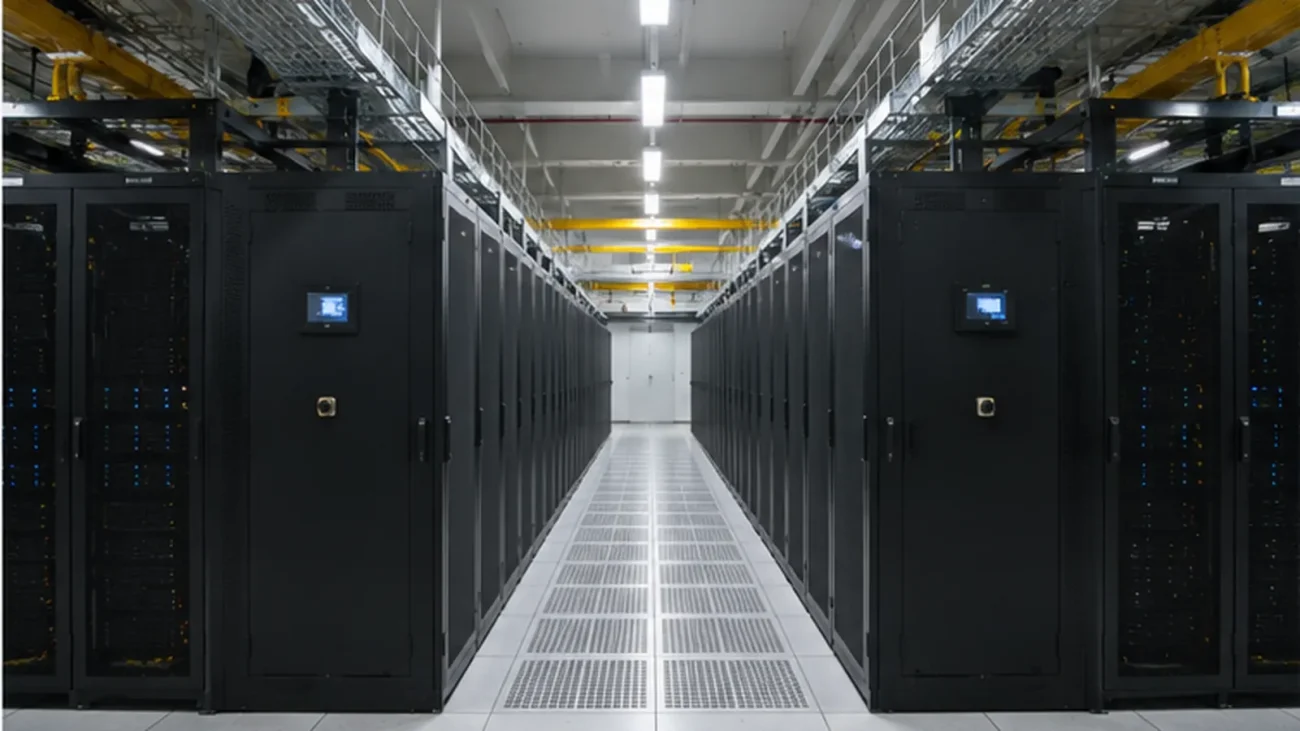
As rack power increases, the cost of moving enough air through the white space also increases.
Higher-density air cooling can require more:
- CRAH capacity;
- fan power;
- containment;
- chilled-water capacity;
- floor or ceiling air distribution;
- electrical capacity for cooling;
- space between high-load racks.
At some point, the cooling system starts consuming resources that could otherwise support IT equipment.
The financial question then shifts from:
How much does liquid cooling cost?
to:
How much additional facility infrastructure is required if we stay with air cooling?
That is where liquid cooling can become economically attractive even if some of its individual components cost more.
5. Where Liquid Cooling Adds CAPEX
Direct-to-chip cooling introduces hardware that an air-cooled rack does not normally need.
Typical items include:
- cold plates;
- hoses and quick disconnects;
- rack manifolds;
- leak detection;
- TCS piping;
- filtration;
- control systems;
- Coolant Distribution Units.
Depending on deployment scale, the CDU may be installed in the rack, beside the rack or centrally within the row.
If the architecture has not yet been selected, see our comparison of Rack-Mounted vs Sidecar vs In-Row CDU.
For retrofit projects, CAPEX can also include:
- pipe routing;
- shutdown or phased installation;
- FWS modifications;
- flushing and water-quality work;
- BMS integration;
- commissioning.
This explains why a small retrofit can initially look more expensive than continuing to use an existing air system.
6. Where Liquid Cooling Can Remove CAPEX
Higher Compute Density
If the same amount of compute can be installed in fewer racks, the project may reduce:
- rack count;
- white-space requirement;
- containment;
- cable length;
- some power-distribution infrastructure.
For a greenfield project, that can reduce the size of the data hall.
For an existing facility, it may allow new AI capacity to be deployed without constructing another room.
Reduced Room-Level Cooling
Direct-to-chip systems normally do not remove every watt of heat from the room.
Power supplies, memory, networking and other components may still reject heat to air.
The practical design is often hybrid:
Liquid cooling handles the high-heat components; the air system handles residual heat.
This means the financial benefit is usually not “remove every CRAH.”
It is often:
Reduce how large the room-level air system needs to be.
7. Energy Cost: Use PUE as a Sensitivity Test, Not a Sales Claim
Cooling architecture can materially affect facility energy use, but a fixed percentage saving should not be assumed.
A simple sensitivity calculation is more useful.
For:
- 10 MW IT load;
- 8,760 operating hours per year;
- electricity price of $0.10/kWh;
the annual impact of different PUE gaps would be:
| PUE Difference | Annual Energy Difference | Annual Cost Difference |
|---|---|---|
| 0.05 | 4.38 GWh | $438,000 |
| 0.10 | 8.76 GWh | $876,000 |
| 0.20 | 17.52 GWh | $1.752 million |
This does not mean liquid cooling will automatically improve PUE by 0.05, 0.10 or 0.20.
The table shows why the actual modeled PUE difference matters so much at multi-megawatt scale.
The real result depends on:
- site climate;
- water temperatures;
- chiller operation;
- server fan power;
- pump power;
- dry cooler fan power;
- IT utilization;
- operating hours.
A small efficiency difference multiplied across a large AI facility can become financially significant.
8. Include Server Fan Power in the Analysis
PUE alone does not reveal the entire cooling cost.
Server fans sit inside the IT equipment, so their electricity consumption normally appears as IT power rather than facility cooling power.
That means two facilities can show similar PUE while using different amounts of total electricity to deliver the same compute.
For TCO analysis, ask:
How much total electrical energy is required to deliver the same useful compute?
This should include:
- server fan power;
- CDU pumps;
- FWS pumps;
- CRAH fans;
- dry cooler fans;
- chillers where required.
For high-intensity compute, this is a more meaningful financial comparison than PUE alone.
9. Chiller Operation Can Change the Economics Significantly
A major advantage of warm-water liquid cooling is the possibility of rejecting heat at higher water temperatures.
The thermal path may be:
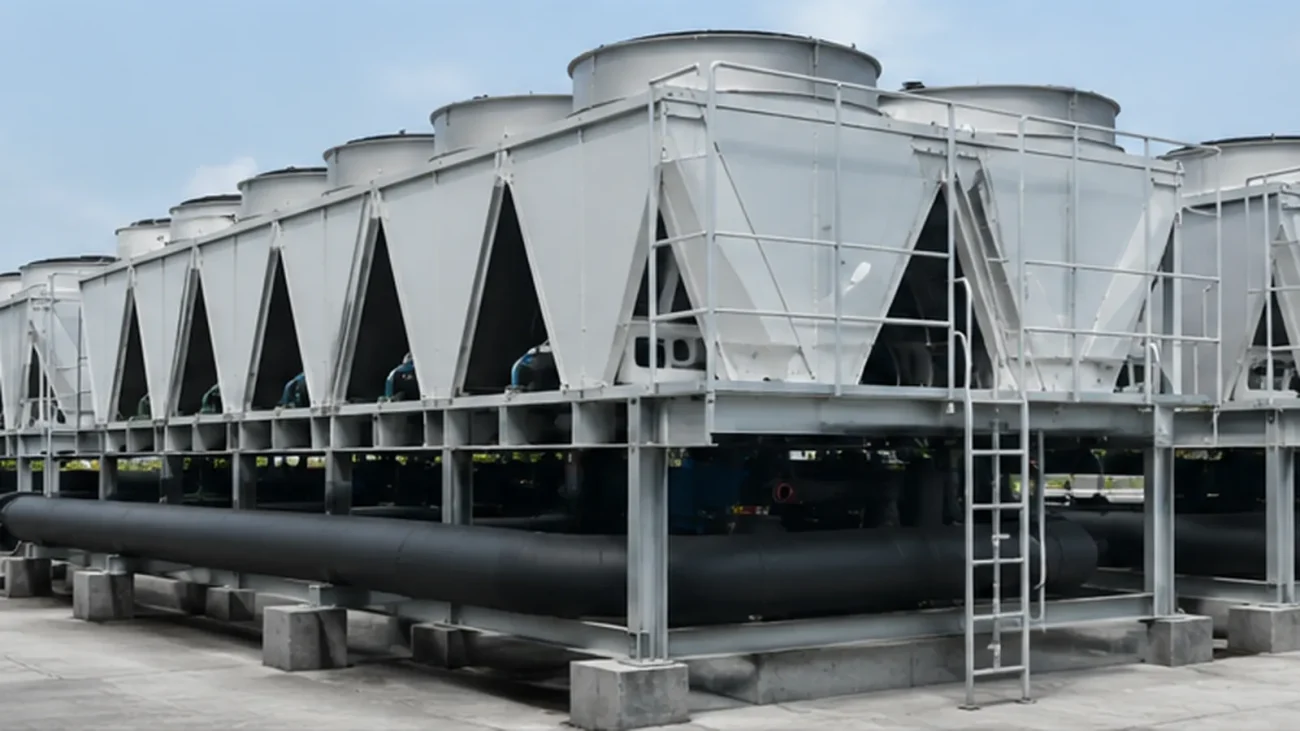
GPU/CPU → Cold Plate → TCS → CDU → FWS → Dry Cooler
Where climate and water temperatures allow, a Data Center Dry Cooler can reject facility heat without compressor-based refrigeration during suitable operating conditions.
This can reduce:
- chiller runtime;
- compressor power;
- cooling-system complexity.
But liquid cooling does not automatically mean chiller-free operation.
The answer depends on:
- FWS supply temperature;
- FWS return temperature;
- summer design ambient;
- approach temperature;
- glycol concentration.
Our guide on how to size a dry cooler for a liquid-cooled data center explains how these conditions determine whether standard dry cooling, assisted cooling or mechanical refrigeration is required.
10. White Space Has a Cost
Cooling cost should not be separated from rack density.
Suppose one architecture requires 100 racks while another can support the same compute capacity in substantially fewer racks.
The economic difference includes more than the rack cabinets themselves.
Potentially affected costs include:
- data hall floor area;
- busway;
- structured cabling;
- containment;
- fire protection;
- lighting;
- air-handling capacity.
If space is abundant, this may not matter much.
If a data hall is already full, however, releasing white space can be more valuable than saving a few percentage points on cooling-equipment CAPEX.
This is particularly relevant when adding AI infrastructure to an existing colocation or enterprise facility.
11. Retrofit and Greenfield Projects Should Be Evaluated Differently
Existing Moderate-Density Facility
Consider an existing data center with:
- 15 kW racks;
- spare CRAH capacity;
- spare chilled-water capacity;
- available white space.
Keeping air cooling may be cheaper.
There is little reason to introduce a liquid loop unless the workload requires it.
Existing Facility Adding High-Density AI
Now assume the same building needs 80–120 kW AI racks.
Remaining with air cooling may require:
- additional CRAHs;
- more chilled-water capacity;
- containment modifications;
- power upgrades;
- rack-spacing changes.
A hybrid retrofit may be less disruptive:
- liquid cooling for AI racks;
- existing air cooling for residual and lower-density loads.
The cost comparison has changed even though the building has not.
12. Future Expansion Can Change the Day-One Decision
A cooling system should not be selected only for Phase 1.
Suppose:
- Phase 1 = 1 MW;
- Phase 2 = 3 MW;
- final buildout = 5 MW.
An air-cooled design may appear cheaper for the first megawatt but require major infrastructure replacement later.
A liquid-cooling design can instead reserve:
- common header capacity;
- CDU connection points;
- outdoor dry cooler space;
- electrical capacity;
- future cooling zones.
This does not mean installing 5 MW of equipment on day one.
It means designing a system that can grow without rebuilding the core infrastructure.
For CDU planning, see How to Size a CDU for Data Center Liquid Cooling.
13. Which Option Is More Likely to Be Cost-Effective?
The following ranges are project-planning indicators, not universal thresholds.
| Project Condition | Likely Cost Direction |
|---|---|
| Moderate-density racks with spare existing cooling | Air cooling usually favored |
| Small legacy retrofit with limited growth | Air cooling often favored |
| Mixed-density existing data center | Hybrid design often worth evaluating |
| 50–80 kW/rack AI deployment | Detailed TCO comparison needed |
| 100 kW+ high-density racks | Liquid cooling becomes increasingly attractive |
| White-space constrained facility | Liquid cooling gains value |
| Large AI/HPC greenfield project | Liquid cooling should be evaluated early |
| Warm-water operation with long free-cooling hours | Liquid cooling can gain significant OPEX advantage |
| Multi-MW future expansion | Modular liquid infrastructure can improve scalability |
The crossover point is not a single rack-power number.
It depends on the whole facility.
14. Build the Business Case With Four Numbers
A complicated financial model still needs a few headline metrics.
1. CAPEX per MW of Useful Compute
Include the building, cooling and power infrastructure required to deliver the same computing output.
2. Annual Energy Cost per MW
Use modeled facility and IT cooling energy, not generic efficiency claims.
3. White-Space Requirement per MW
Calculate how many racks and how much floor area are required.
4. Cost of the Next MW
Ask what must be added when the facility expands.
This last figure is frequently overlooked.
A system that is inexpensive at 1 MW but requires a major plant upgrade at 2 MW may not be the lower-cost design.
15. Cost Comparison Checklist
Before approving either design, put the following inputs into the same model:
| Input | Project Value |
|---|---|
| Useful compute / IT requirement | ______ |
| Rack quantity | ______ |
| kW per rack | ______ |
| Estimated PUE | ______ |
| Expected utilization | ______ % |
| Electricity price | ______ /kWh |
| Cooling CAPEX | ______ |
| Required white space | ______ |
| Chiller requirement | Yes / No |
| Dry cooling availability | ______ |
| Water requirement | ______ |
| Annual maintenance | ______ |
| Redundancy level | ______ |
| Phase 2 load | ______ MW |
| Final buildout | ______ MW |
| Financial evaluation period | ______ years |
If the proposals use different redundancy, compute density or utilization assumptions, normalize those values before comparing cost.
Frequently Asked Questions
Is Liquid Cooling Always Cheaper Than Air Cooling?
No. Air cooling can remain the lower-cost solution for moderate-density projects where existing infrastructure has enough spare capacity. Liquid cooling becomes more financially attractive as density, space constraints and cooling demand increase.
Is Liquid Cooling More Expensive to Install?
It can add CDU, piping, manifold, cold-plate and controls cost. At higher densities, some of that CAPEX may be offset by reduced air infrastructure, higher rack density and a smaller facility footprint.
How Much Energy Does Liquid Cooling Save?
There is no reliable universal percentage. The result depends on the actual PUE difference, server fan power, coolant temperature, climate, chiller operation, pump power and utilization.
Does Direct-to-Chip Cooling Eliminate Air Cooling?
Usually not completely. Residual heat from components not connected to the liquid loop still needs to be removed, so many facilities retain a smaller air-cooling system.
What Is the Best Metric for Comparing Air and Liquid Cooling?
For financial decisions, compare total lifecycle cost per unit of useful compute. Use PUE, $/MW, $/rack and floor area as supporting metrics rather than relying on one number.
Order & Project Support
The liquid cooling vs air cooling cost comparison changes as rack density increases.
At moderate densities, existing air infrastructure may remain the lowest-cost choice.
At higher densities, the calculation begins to include avoided costs:
Fewer Racks + Less White Space + Reduced Air Infrastructure + Lower Cooling Energy + Easier High-Density Expansion
A proper comparison should start with:
Compute Requirement + kW/Rack + Rack Quantity + Site Climate + Electricity Price + Existing Infrastructure + Future Expansion
Then evaluate air and liquid cooling at the same compute output, availability level and design life.
For new AI/HPC projects, XINKE LCS can evaluate the CDU architecture, FWS conditions and heat-rejection system together rather than treating each cooling component as an isolated purchase.
Contact XINKE LCS for a project-specific liquid cooling evaluation.