

Liquid cooling penetration jumped 20 percentage points in one year, rack density surged to 100kW: Liquid cooling enters the “default option” era in 2026.

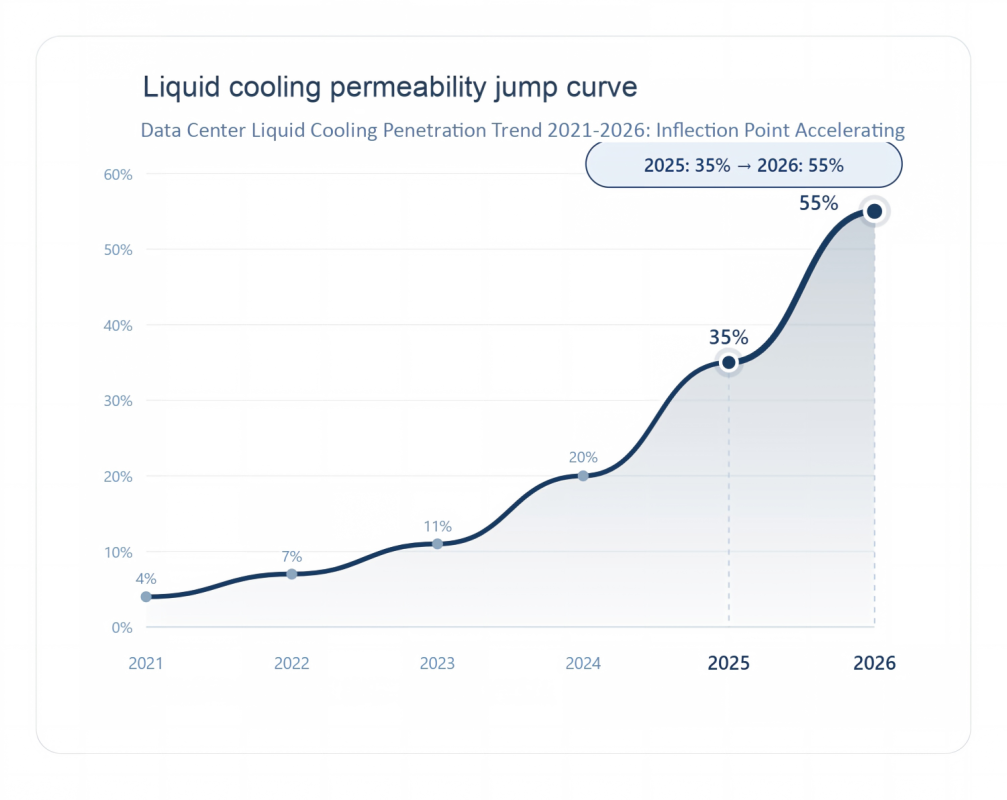
AFCOM’s “2026 State of the Data Center Report” provides two figures that are poised to rewrite industry expectations: the penetration rate of liquid cooling in new deployments jumped from 35% in 2025 to approximately 55% by the end of 2026; and the average rack density for AI deployments surpassed 50kW, with leading projects exceeding 100kW. Two years ago, a 30kW rack was considered an aggressive configuration; today, 50kW is merely the minimum acceptable level. Liquid cooling is transitioning from an “optional” to a “default option.”
Penetration rate jumps 20 percentage points in one year: The tipping point has arrived.
The surge in liquid cooling penetration is no accident. Single-chip power consumption has jumped from 700W for the H100 to 2000W for Rubin, and even over 5000W for Vermeer, physically pushing traditional air cooling to its limits. NVIDIA’s Rubin platform is the industry’s first 100% liquid-cooled architecture—every chip and every network component is cooled by a closed-loop liquid cooling system, with no fans within the system. Simultaneously, policies are tightening: China requires that by 2026, the liquid cooling penetration rate of newly built data centers be no less than 60%, and that the PUE of newly built ultra-large data centers in the “East Data West Computing” hub nodes be no higher than 1.2, with 70% using liquid cooling. The combined forces of computing density, platform architecture, and policy constraints have transformed the gradual increase in penetration rate into a critical point. Liquid cooling is no longer an “energy-saving option,” but a dual “must-have” for both computing power deployment and regulatory compliance.
Rack density reaches 100kW: AI is rewriting design benchmarks
The report shows that the average rack density for AI deployments has reached 50kW, with leading projects exceeding 100kW. It recommends that new AI projects be designed starting at 60-80kW, with provisions for expansion to over 100kW. This means that data centers planned for 30kW standards two years ago are already outdated before completion. This leap in rack density directly alters the physics of heat dissipation: as heat is concentrated in smaller spaces, the era of air cooling, relying on air to transport heat, is fading, and liquid cooling is becoming the only viable solution. Each increase in density rewrites the allocation logic of land, power, and cooling infrastructure in data centers.
Chain reaction: From bidding qualifications to water efficiency standards
The shift in density is triggering a triple chain reaction downstream in the industry chain. First, AI load now accounts for over 40% of new managed lease demand, a year-on-year increase of 62%, directly excluding operators without liquid cooling capabilities from bidding. Second, the transformation process is proving far more time-consuming than anticipated—an average delay of 30% was observed in 87 transformation projects sampled in 2025, disrupting the traditional “lease signing first, transformation initiation later” approach. Third, 48% of AI tenants are incorporating water efficiency (WUE) into their site selection assessments, making closed-loop liquid cooling solutions with zero evaporation loss increasingly popular. Owners who were among the first to deploy liquid cooling have thus reaped rental returns of 15%-25% higher per square foot. Liquid cooling has evolved from a technical issue into a matter of commercial competitiveness and a compliance requirement.
The Era of Default Options: From “Can it get cold?” to “How to get colder smarter?”
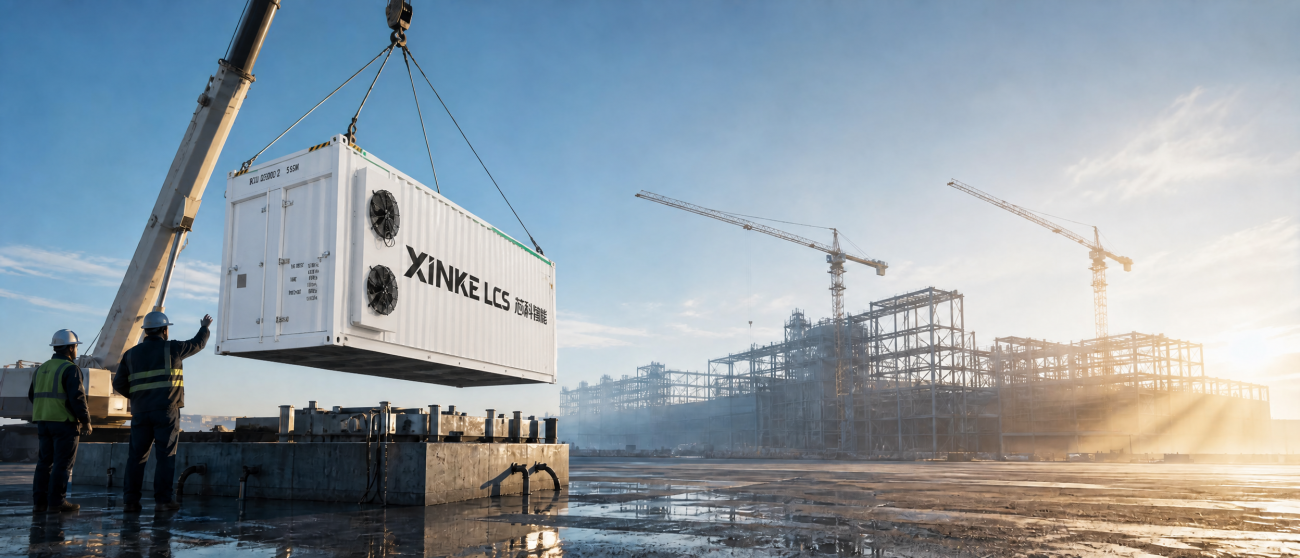
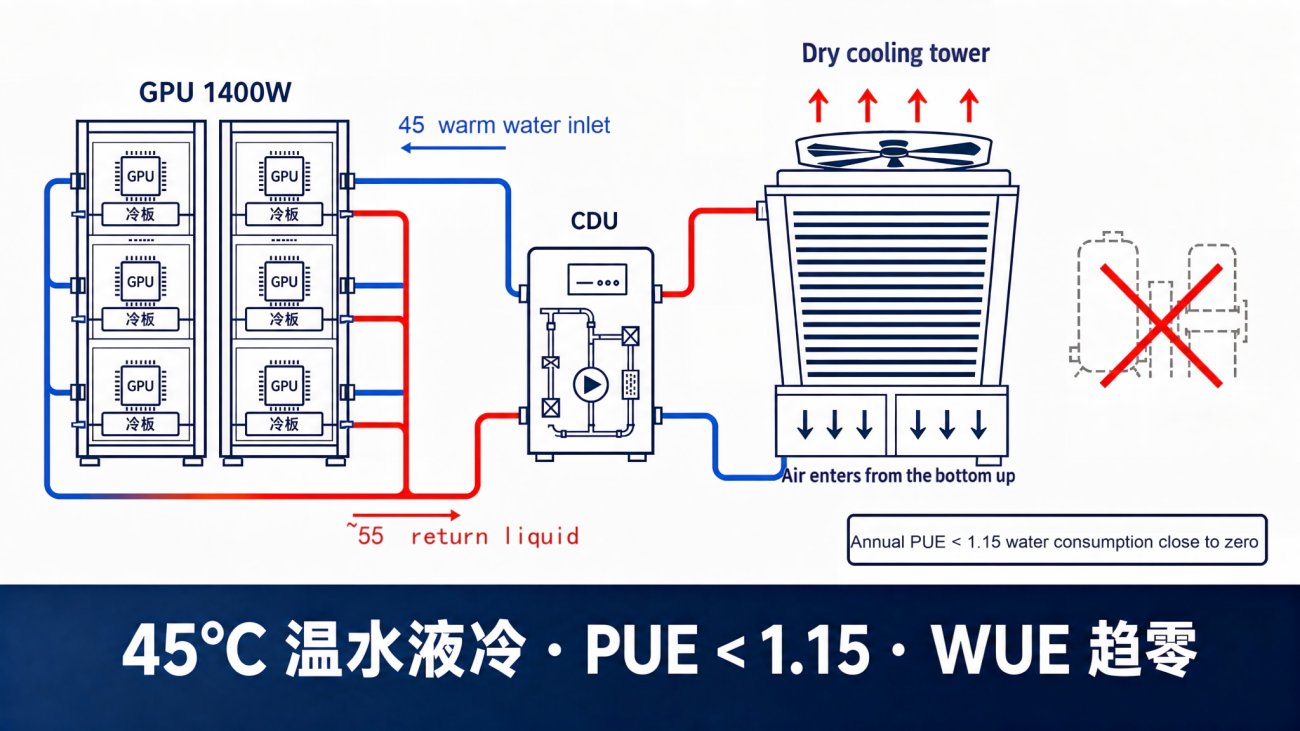
As liquid cooling becomes the default option, the focus of competition in the industry has shifted from “whether liquid cooling exists” to “whether liquid cooling is intelligent.” 45℃ high-temperature water supply combined with dry coolers to achieve chiller-free operation, near-zero water consumption in closed loops, waste heat recovery for heating, and modular rapid delivery are becoming the new generation of design consensus. The implementation of this consensus tests the system capabilities of equipment manufacturers: taking Silicon Labs as an example, its 2.6MW cold plate CDU directly connects to the GB200/GB300 NVL72 supernode cabinet, with cooling capacity covering power consumption ranges above 150kW and a PUE as low as below 1.15; the accompanying dry cooling tower supports 45℃ high-temperature water supply and near-zero water consumption in closed loops, and the 90% waste heat recovery rate transforms computing waste heat from a “burden to be processed” into “renewable thermal energy.” For data center builders, the choice is no longer just a set of cooling equipment, but a complete computing infrastructure architecture for the high-density era—Silicon Technologies makes the “default option” truly feasible with its full product line covering data center micro-modules and containers.
Penetration rate and rack density are two coordinates representing the redistribution of computing power on the world map. When each square meter of rack begins to carry an era, the boundary of liquid cooling becomes the boundary of computing power growth. Liquid cooling has entered the era of “default option,” making computing power more efficient and energy greener, which has become a common answer for builders and equipment manufacturers—and Silicon Labs is one of the writers of this answer.
Data source: AFCOM’s “2026 State of the Data Center Report”