

Flare Gas Bitcoin Mining: Cooling and Power Options

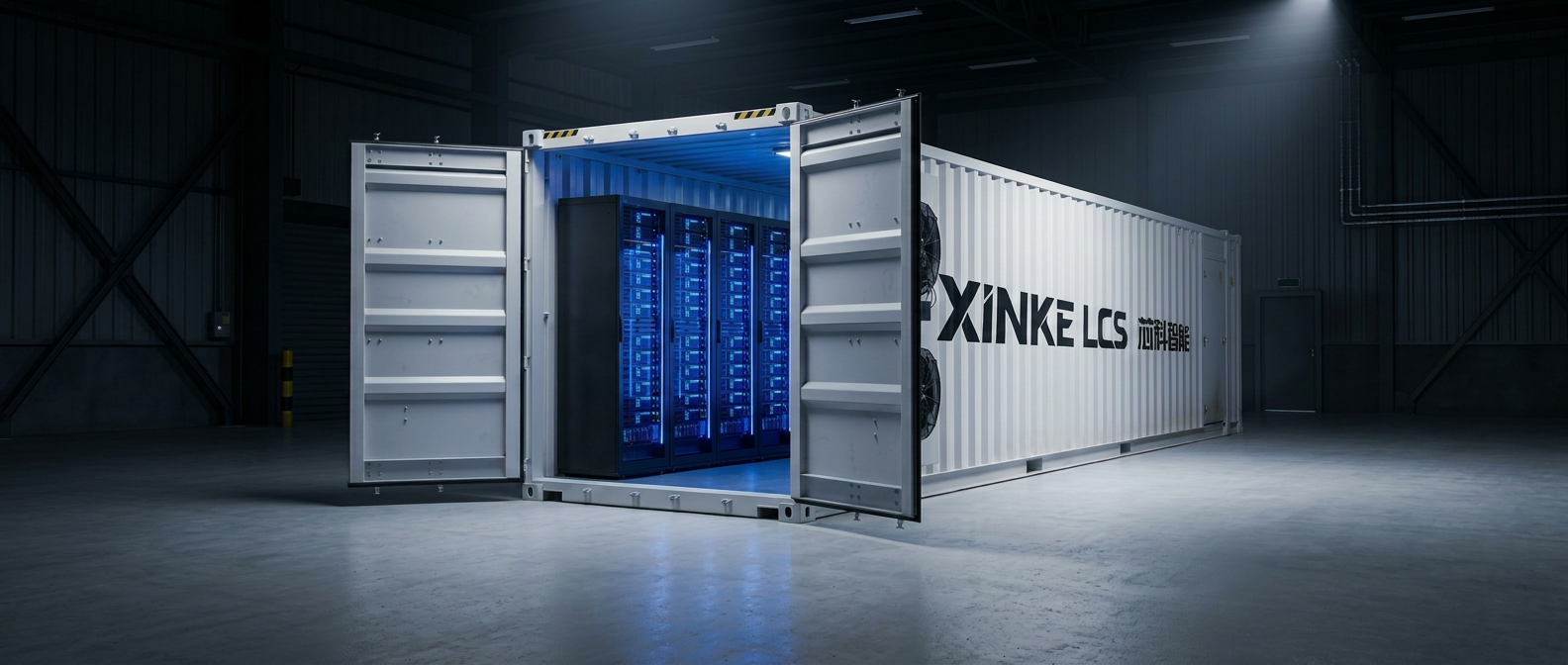
Flare gas Bitcoin mining places power generation and mining load at the same remote site. The gas cannot be economically exported, grid access is limited or unavailable, and water may be scarce. In this arrangement, the cooling system has to operate with the same constraints as the generator: limited site services, changing operating conditions and few technicians available for routine intervention.
We configure the mining side around a liquid-cooled container and closed-loop heat rejection. Compatible ASIC miners transfer heat into the coolant circuit; the container’s CDU transfers that heat to a secondary loop; and outdoor dry coolers reject it to the air without evaporative water consumption. The upstream gas-treatment and generation package supplies the electrical power and is matched to the mining load separately.
Power path: flare gas collection and conditioning → gas engine generator → switchgear and transformer → mining-container power distribution
Cooling path: miner cold plates → primary coolant loop → CDU heat exchanger → secondary loop → outdoor dry cooler
Flare gas mining requires a defined power and cooling boundary
The power system and cooling system connect at the mining container. The gas engine generator is upstream. Its usable continuous output must cover the miners and cooling auxiliaries, including pumps, dry-cooler fans, controls and communications equipment. The mining load should be based on the generator’s net available output after these loads are included.
Gas quality and supply conditions affect generator selection. The gas-to-power design needs the flare-gas composition, pressure, flow range and expected variation. Gas conditioning may be required before the fuel reaches the engine. Those requirements belong to the upstream gas-treatment and generation package; the mining container receives conditioned site power through its electrical interface.
How the liquid-cooled container handles the mining load
Inside the Antminer 480-position 40HQ liquid-cooled container, miner heat passes through cold plates into the coolant. The coolant circulates through the container’s dual-loop, dual-CDU arrangement, while integrated power distribution supplies the mining positions.
The left and right cooling loops operate independently. This separates the container into two circulation sections and gives operators a defined way to isolate one side during maintenance or a fault. The equipment also keeps water and electrical circuits physically separated and uses 304 stainless-steel seamless piping in the coolant circuit.
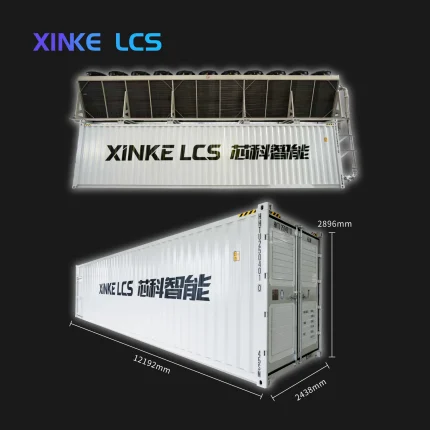
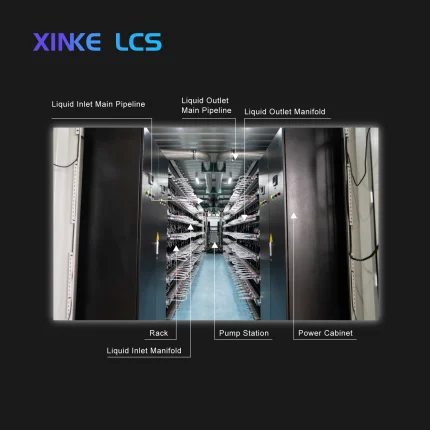
Only miners designed for liquid cooling should be connected to this circuit. The miner model determines cold-plate compatibility, required flow and operating limits. Air-cooled ASICs are not made compatible simply by installing them in a liquid-cooled container.
Why a dry cooler fits a water-scarce flare-gas site
After heat passes through the CDU heat exchanger into the secondary loop, the warm coolant flows to the dry cooler. Finned coils transfer heat from the closed coolant circuit to outdoor air, and EC axial fans provide the airflow. In dry-cooling mode, the heat-rejection process does not require evaporative water.
We configure dry coolers from 50 kW to 2,000 kW per unit, with parallel units for larger cooling loads. Variable-speed fans adjust airflow to operating demand. For a flare-gas site, this lets the heat-rejection equipment operate without a continuous make-up water supply, which can be difficult to provide at a remote well pad.
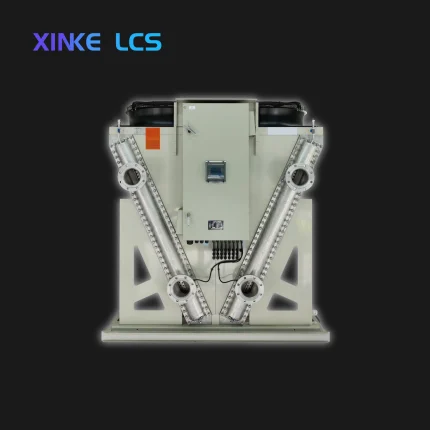
Dry-cooler capacity depends on outdoor temperature and the required coolant supply temperature. A hot ambient condition reduces the temperature difference available for heat rejection. We select the cooler against the site’s peak design temperature and the actual return and supply temperatures required by the miners, rather than using the unit’s nominal capacity alone.
Our dry-cooler configurations can be designed for ambient conditions up to 50°C. Where the site’s peak temperature prevents dry cooling from maintaining the required coolant conditions, the design needs additional heat-rejection capacity or a mechanical-cooling stage. A water-curtain or spray option can assist heat rejection, but it introduces water demand and therefore does not suit every no-water site.
Power options for a variable flare-gas supply
Flare-gas volume and quality can change, so the generator plant and mining load should be designed to operate together across the expected range. The generator supplier must confirm how the selected engine handles the site’s gas composition and flow variation. The mining load should then be divided into electrical blocks that can be brought online in stages.
We integrate power distribution within the mining container, while the gas engine generator and gas-conditioning equipment form the upstream power plant. The electrical design coordinates generator output, transformer capacity, container distribution and cooling auxiliaries. It also defines the restart sequence after a generator trip or unstable supply: cooling and control equipment must be available before miner loads are restored.
For remote operation, critical controls and communications can be supplied through a suitably sized UPS so monitoring and shutdown functions remain available during short generator transitions. A UPS supports control, network and protection functions for its specified backup period; it is not sized to sustain the full mining load.
Where gas supply variation requires generation capacity to be brought online or taken offline, the generator package can use modular units. Mining loads can then be staged to match stable available power instead of restarting the entire container at once. Generator sequencing and load-shedding logic must be coordinated with the power-system integrator.
Remote monitoring for unattended operation
A remote flare-gas site needs monitoring that can distinguish a generator-side problem from a mining-container cooling problem. On the cooling side, the relevant signals include coolant temperature, pressure and flow, CDU status, dry-cooler fan operation, leak warnings and auxiliary energy use.
Optional XINKE SMART management provides remote monitoring, leak warnings and energy analysis. The container control system monitors temperature, pressure and flow in the cooling circuit. These readings show whether coolant is circulating and whether the outdoor heat-rejection equipment is responding to the load.
For an unattended site, the operating sequence should define the response to a stopped pump, low flow, rising coolant temperature or fan failure. The controls need to alert the operator and place the affected mining section in its specified safe state. Automatic miner shutdown behavior should be agreed with the miner and controls suppliers during system integration.
Remote monitoring does not remove the need for maintenance. Dry-cooler coils need inspection and cleaning where dust, oilfield debris or sand can restrict airflow. Pumps, electrical connections, filters, sensors and coolant condition also need an inspection schedule suited to the site’s access and staffing constraints.
Cooling and electrical loads must be sized together
The mining container, generator and dry cooler cannot be selected as separate nameplate purchases. The installed ASIC load determines the heat entering the coolant. The CDU and pumps must deliver the required flow through the actual piping circuit. The dry cooler must reject the full heat load at the design ambient temperature. The generator must supply the miners and cooling equipment at the same operating point.
For each proposed mining configuration, we match:
- Miner model, liquid-cooling compatibility and quantity
- Miner power demand and total container load
- Coolant supply temperature, return temperature and flow per miner
- CDU duty and pressure drop through the connected circuit
- Dry-cooler capacity at the site’s peak ambient temperature
- Pump and fan power included in the generator load
- Generator voltage, frequency and usable continuous output
- Expected flare-gas flow and composition range for generator selection
If the generator has limited spare capacity, increasing the number of miners can leave insufficient power for cooling auxiliaries. If the dry cooler is undersized, miners may need to reduce load even when the generator has available output. The power and cooling design therefore need to use the same operating load and site conditions.
Flare gas Bitcoin mining system configuration
For a remote flare-gas mining site, we configure the mining side around a liquid-cooled container, dual circulation loops and outdoor dry coolers. The container integrates miner positions, cooling circulation and power distribution. The dry cooler rejects heat through a closed loop without relying on evaporative water. Remote monitoring provides visibility into cooling conditions at a site with limited personnel.
The generator and gas-treatment package must be selected for the measured flare-gas characteristics and coordinated with total electrical demand, including cooling. This arrangement gives each system a defined role: gas conditioning and generation supply the site; the container distributes power to compatible miners and circulates coolant; the dry cooler removes the mining heat.
FAQ
Can flare gas directly power Bitcoin miners?
Flare gas is used as fuel for an engine-generator system, which produces electricity for the mining load. Gas composition, pressure and flow must be checked against the generator requirements, and gas conditioning may be required before the fuel enters the engine.
Can a flare-gas mining site operate without water for cooling?
A liquid-cooling container paired with a dry cooler can reject heat through a closed coolant loop without evaporative water consumption. The dry cooler must be sized for the site’s peak outdoor temperature and the miners’ required coolant conditions.
Does the mining container include the gas generator?
The mining container integrates miner positions, power distribution and cooling equipment. Flare-gas treatment and engine-generator equipment are upstream systems and must be designed to deliver power that matches the mining and cooling loads.
How can the cooling system be monitored at an unattended site?
Cooling-system monitoring can track temperature, pressure, flow, fan operation and leak alarms, with remote notifications and energy analysis available through the management system. The project controls should also define the response to low flow, pump failure, high coolant temperature and loss of generator supply.
What information is needed to configure the mining and cooling system?
Provide the miner model and quantity, liquid-cooling requirements, target power load, site location, peak outdoor temperature, available electrical output, required coolant conditions and water availability. The gas-power designer should also provide the flare-gas composition, pressure and flow range for generator selection.