

Xinke Intelligent’s AquaPlex-45 Liquid-Cooled Intelligent Computing Pod Debuts at the China Computing Power Conference

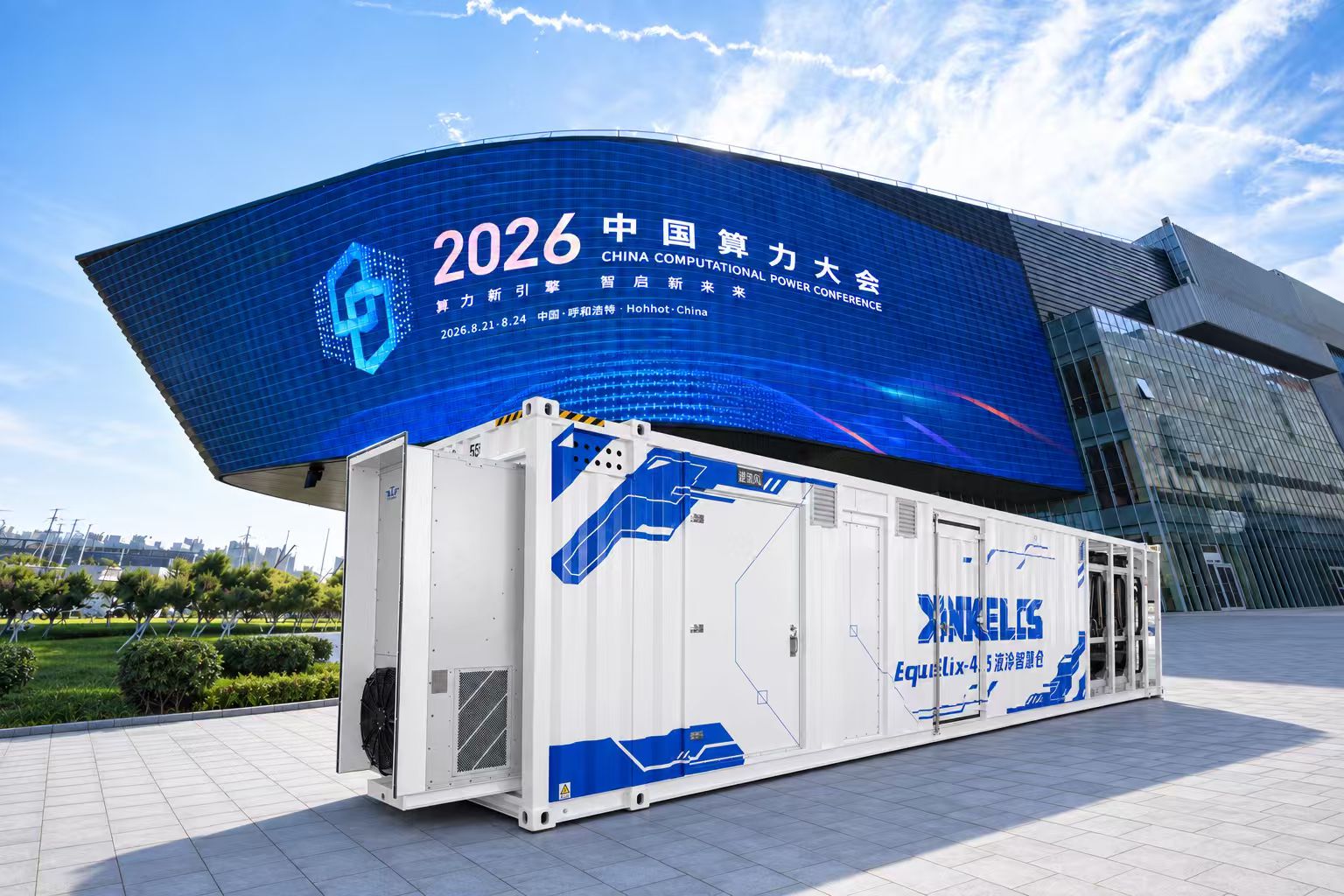
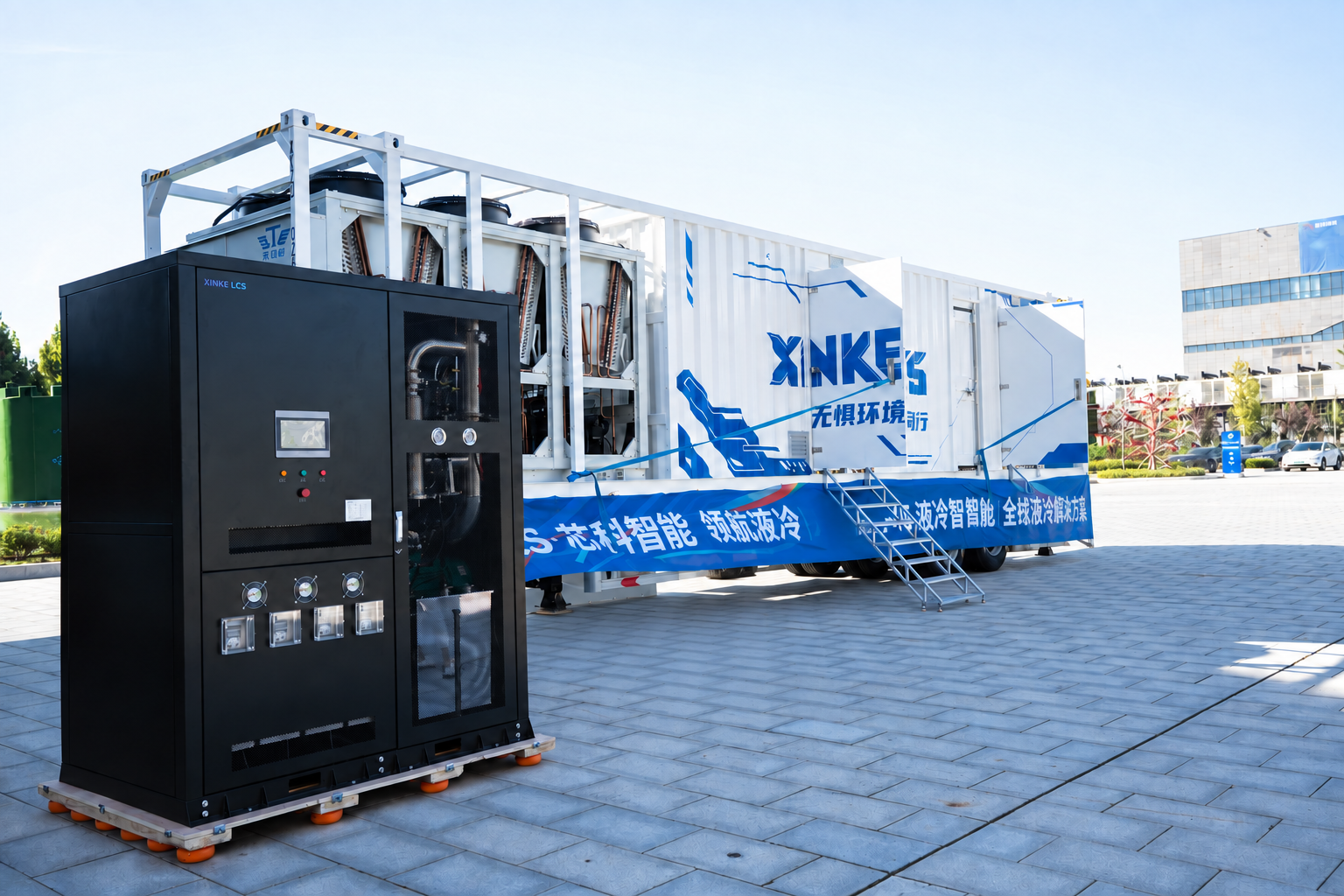
Xinke Intelligent officially launched the AquaPlex-45 liquid-cooled intelligent computing pod at an exhibition held at the Beijing-Tianjin-Hebei Big Data Innovation and Application Center in Langfang, Hebei Province. Distinguished by an annual PUE of 1.2 and WUE of 1.0, the new product supports servers equipped with NVIDIA B300 and GB300 chips. It integrates infrastructure—including power supply, computing capacity support, cooling, and monitoring management—into a single pod, offering an all-in-one solution for computing infrastructure development that balances high-density deployment with resource utilization efficiency.
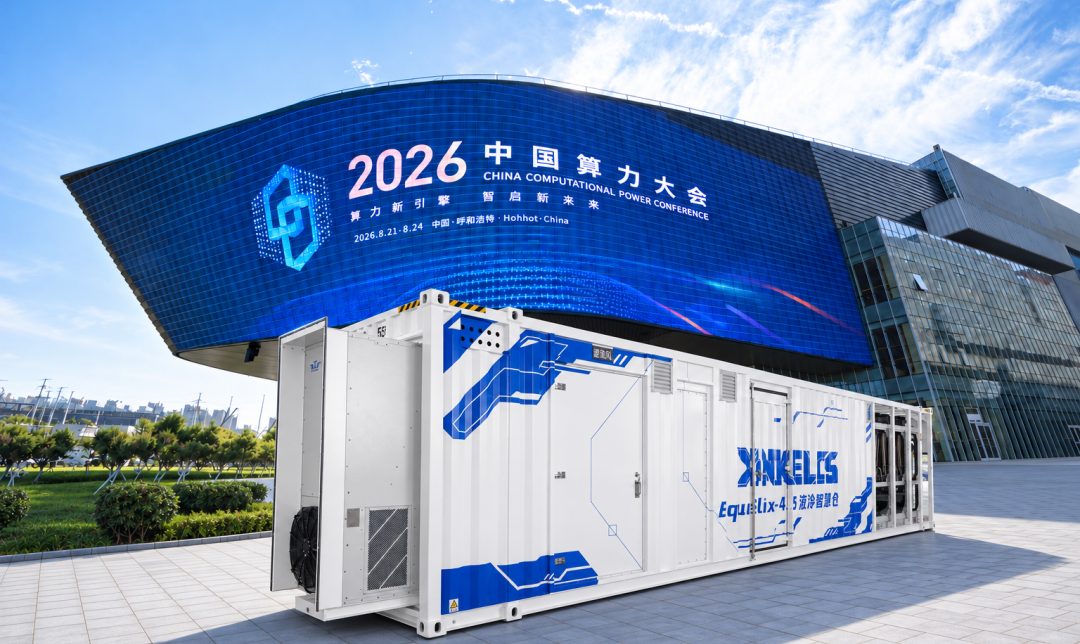
As the density of computing hardware increases, infrastructure must not only meet the need for rapid deployment but also address power and water consumption during ongoing operations. AquaPlex-45 integrates energy efficiency, water efficiency, and hardware compatibility into its overall design; by utilizing unified air-liquid cooling, prefabricated integration, and automated control, it enables users to balance construction efficiency with operational efficiency.
This global launch marks a significant milestone in Xinke Intelligent’s efforts to commercialize high-density computing infrastructure. Driven by a mission to fill gaps in the industry, Xinke Intelligent has developed an integrated intelligent computing pod that combines compatibility with B300 and GB300 servers, unified air-liquid cooling, and prefabricated delivery, thereby meeting the demands for rapid deployment and efficient operation of high-performance server infrastructure.
Founder Wang Chong shared the rationale behind the new product’s development on-site.
At the launch event, presentations addressed the pain points associated with the construction of computing power infrastructure and outlined approaches to product innovation; the functional design and application scenarios of the AquaPlex-45 liquid-cooled intelligent computing pod were also introduced.
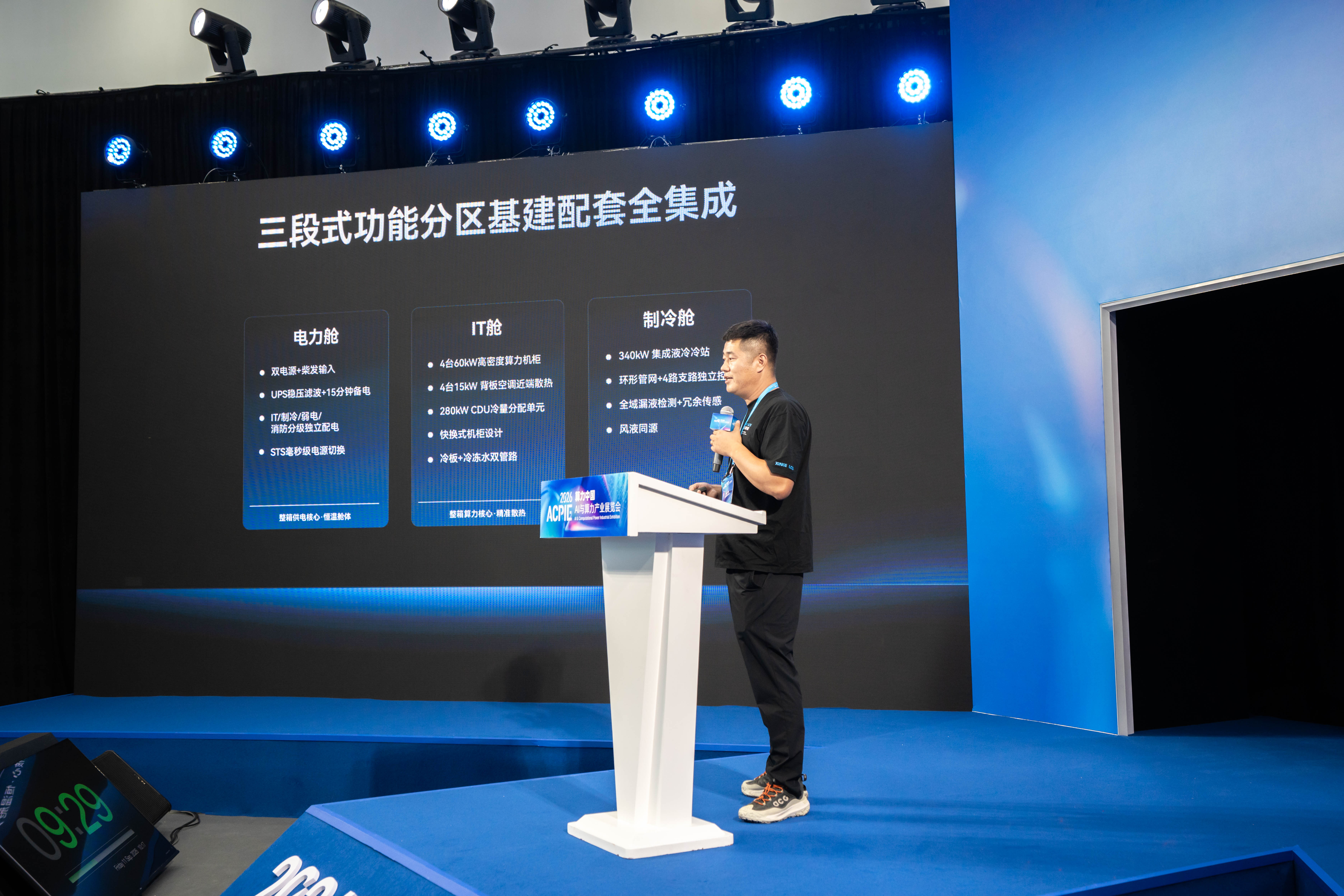
In his presentation, Wang Chong noted that the construction of traditional computing infrastructure involves multiple stages—such as civil engineering, electromechanical systems, and cooling—resulting in long lead times and demanding requirements regarding site conditions and specialized O&M. For users seeking to rapidly scale up computing power and flexibly select deployment locations, product design must address the challenges of minimizing on-site construction and reducing the complexity of system integration.
To meet these needs, AquaPlex-45 integrates prefabricated modularity, a unified air-liquid cooling architecture, and automated O&M into a comprehensive solution, balancing deployment efficiency, power reliability, and operational management. Wang Chong’s remarks further highlighted the rationale behind this new product: enabling infrastructure to be deployed flexibly in line with business needs while providing the necessary support for high-density computing operations.
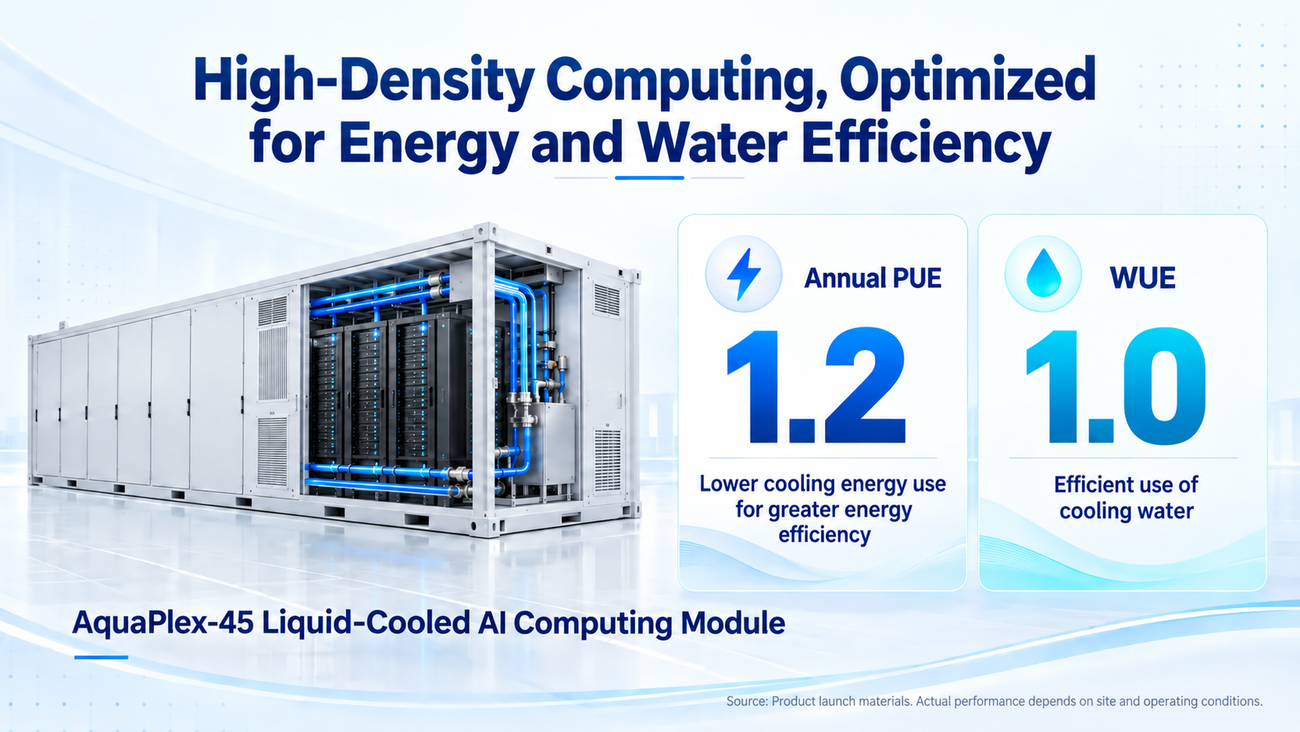
Achieving an annual PUE of 1.2 and WUE of 1.0, balancing energy and water efficiency.
The value of high-density computing power lies not only in equipment performance but also in resource utilization efficiency during long-term operation. According to the product specifications released, the AquaPlex-45 achieves an annual PUE of 1.2 and a WUE of 1.0; it meets the thermal management needs of computing equipment while optimizing the energy consumption and water efficiency of supporting systems.
PUE reflects the relationship between a data center’s total energy consumption and that of its IT equipment; the closer the value is to 1, the lower the proportion of energy consumed by supporting infrastructure. An annual PUE of 1.2 implies that for every unit of electrical energy consumed by IT equipment, the total facility energy consumption is 1.2 units. For computing projects requiring continuous operation, reducing auxiliary energy consumption—such as that from cooling and power distribution—is a key strategy for improving operational efficiency.
WUE reflects the relationship between water consumption and IT equipment energy usage, serving as a vital metric for assessing the water efficiency of computing facilities. The specified WUE of 1.0 highlights the new product’s focus on minimizing water resource consumption. Considering both energy and water efficiency allows users to factor electricity and water supply conditions into the comprehensive assessment when planning computing projects.
The AquaPlex-45 integrates equipment thermal management and resource utilization efficiency into a unified system design by employing shared air-liquid cooling, centralized cooling source management, and dynamic cooling supply adjustments based on operational status. The metrics cited here are based on the released product data; actual project performance must be evaluated in the context of specific environmental, load, and operational conditions.
Compatible with servers such as GB300, GB200, H200, and B300, supporting high-density computing deployments.
Designed to meet the deployment requirements of high-performance AI servers, the AquaPlex-45 supports the operation of servers equipped with NVIDIA GB300, GB200, H200, and B300 chips. It integrates the power supply, thermal management, and installation space required for high-density equipment into a unified design, ensuring the necessary infrastructure is in place for server deployment.
To address the thermal management needs of high-performance servers operating in high-density clusters, the AquaPlex-45 employs a unified air-liquid cooling design. It provides continuous cooling through the synergy of liquid cooling circuits and backplane-proximate cooling components, complemented by independent branch regulation and operational monitoring. The integration of power and cooling systems within the unit itself reduces the workload associated with separate on-site construction and system interconnection.
Users can tailor deployment plans for GB300, GB200, H200, and B300 servers to their specific business needs, determining configurations based on total unit power, cooling capacity, and spatial constraints. By harmonizing the servers with their supporting infrastructure, the AquaPlex-45 offers a clear implementation path for high-density computing deployments while facilitating future maintenance and equipment adjustments.
Synergy among the three modules enables the integrated assembly of infrastructure.
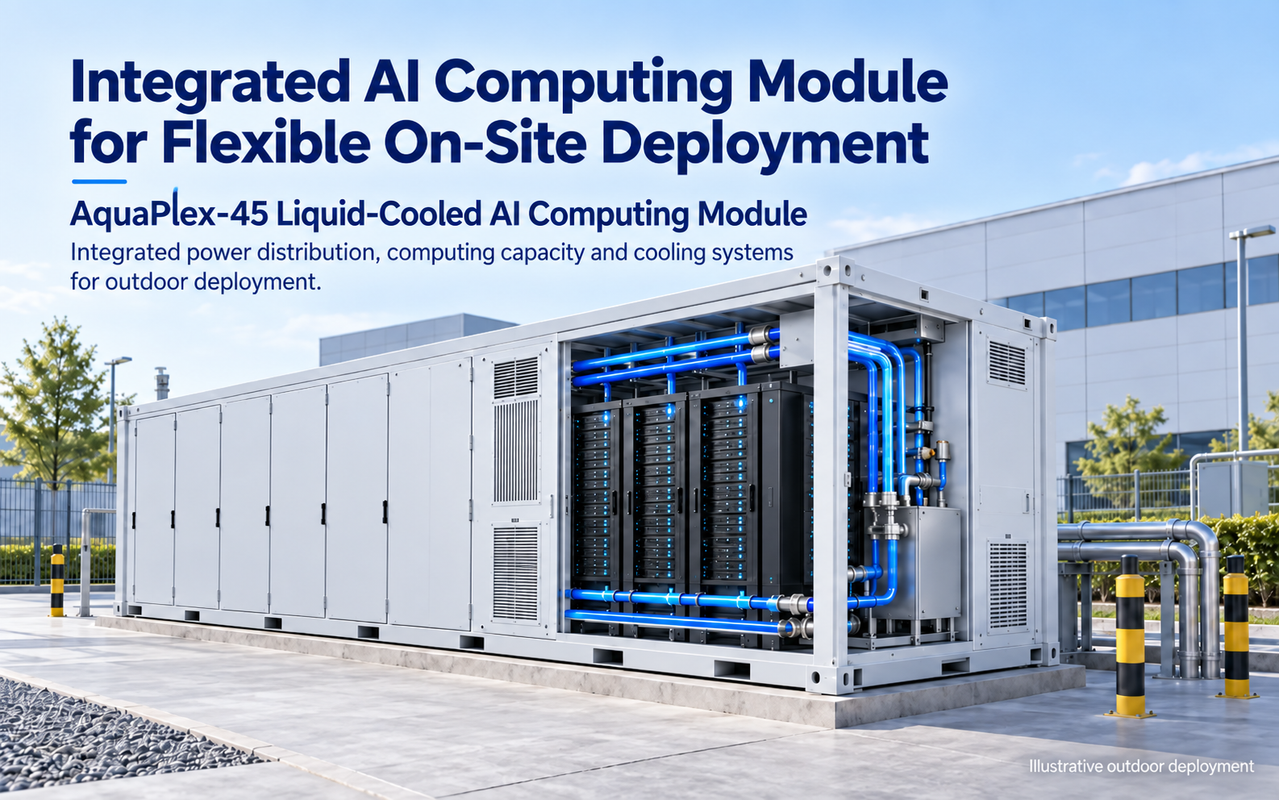
AquaPlex-45 utilizes a 45-foot container form factor, internally divided into power, IT, and cooling compartments. Through distinct functional zoning, the design integrates critical supporting infrastructure—essential for equipment operation—into a unified delivery package.
The power compartment handles the unit’s total power supply, featuring dual power inputs and a diesel generator interface. It incorporates UPS-based voltage regulation and filtering, battery backup, and power switching capabilities to support system operations. Independent, tiered power distribution is employed for IT, cooling, low-voltage, and fire suppression systems, facilitating streamlined operation, management, and maintenance.
The IT compartment houses high-density computing equipment, equipped with liquid cooling piping and rear-door heat exchangers, alongside a quick-swap rack design. Computing capacity and thermal management are holistically integrated within the compartment, accommodating the installation, cooling requirements, and future maintenance of diverse equipment.
The cooling compartment integrates a cooling plant, a ring piping network, and independent flow-control branches to supply cooling to the internal equipment. Coupled with leak detection and sensor arrays, the cooling system works in tandem with the monitoring and management platform to ensure continuous visibility of operational status.
The value of this three-compartment synergy lies in the pre-integration of multiple systems that would otherwise require separate on-site installation and commissioning. Users can plan deployments based on this comprehensive solution, thereby minimizing the interface coordination typically associated with fragmented construction approaches.
Prefabricated delivery shortens the on-site deployment process.
AquaPlex-45 shifts the primary integration and commissioning tasks to the factory, completing the installation of internal piping, electrical components, and associated systems in advance to minimize on-site installation and cross-disciplinary coordination.
Upon arrival, deployment is completed through a sequence of steps: positioning, power connection, system self-check, load startup, and cloud connectivity. Provided that site, power, and network conditions are met, this approach paves the way for the rapid deployment and utilization of computing power.
Multiple safeguards cover power supply and operational management.
The AquaPlex-45 features dual-path power switching via ATS and STS, UPS-based voltage regulation and filtering, and a battery backup capable of supporting a full load for 15 minutes, ensuring seamless power transition during anomalies. Comprehensive operational protection is provided through localized leak detection, physical leak prevention via quick-connect fittings, and a gas-based fire suppression system.
Combining local PLC control with cloud-based remote operations and maintenance (O&M), the system supports status monitoring, remote management, and automated responses to anomalies; this enables O&M personnel to stay informed about equipment and environmental conditions while reducing the need for on-site inspections.
Flexibly configure computing infrastructure to suit practical scenarios.
AquaPlex-45 is designed for applications such as emergency computing capacity supplementation, remote site computing stations, and outdoor computing clusters. As different scenarios prioritize specific aspects of delivery speed, deployment conditions, and O&M methods, the integrated enclosure design offers flexible implementation pathways to meet these diverse needs.
In emergency capacity supplementation scenarios, temporary tasks or surges in business volume can create additional demand for computing power. The prefabricated, integrated nature of the unit facilitates streamlined delivery scheduling, supporting the rapid addition of capacity and reducing the time required for on-site preparation.
Remote site scenarios often require complex coordination regarding on-site construction and the deployment of specialized personnel. By pre-integrating key infrastructure and incorporating remote management capabilities, the need for on-site installation work and routine manual inspections is minimized.
For outdoor computing cluster scenarios, the modular enclosure design enables phased deployment. Users can plan single- or multi-unit configurations based on business scale, site resources, and connectivity requirements, ensuring that the construction timeline aligns with operational needs.
Drive broader application across various scenarios through the launch of new products.
The official launch of the AquaPlex-45 liquid-cooled intelligent computing pod in Langfang showcases Xinke Intelligent’s product solutions for the integration and delivery of computing infrastructure. Key highlights of this new product include an annual PUE of 1.2 and WUE of 1.0, alongside support for B300 and GB300 servers. By combining prefabricated delivery with remote O&M capabilities, the product offers users a comprehensive solution that balances high-density equipment deployment, resource utilization efficiency, and daily management.
Addressing the practical demands of deployment and operation, Xinke Intelligent looks forward to engaging with industry partners to explore the application of liquid-cooled intelligent computing pods across diverse business scenarios. We invite you to contact us to learn more about the AquaPlex-45 and discuss project requirements and partnership opportunities.