

From a single computing module to a 10 MW campus: how do you scale up a liquid-cooled data center?

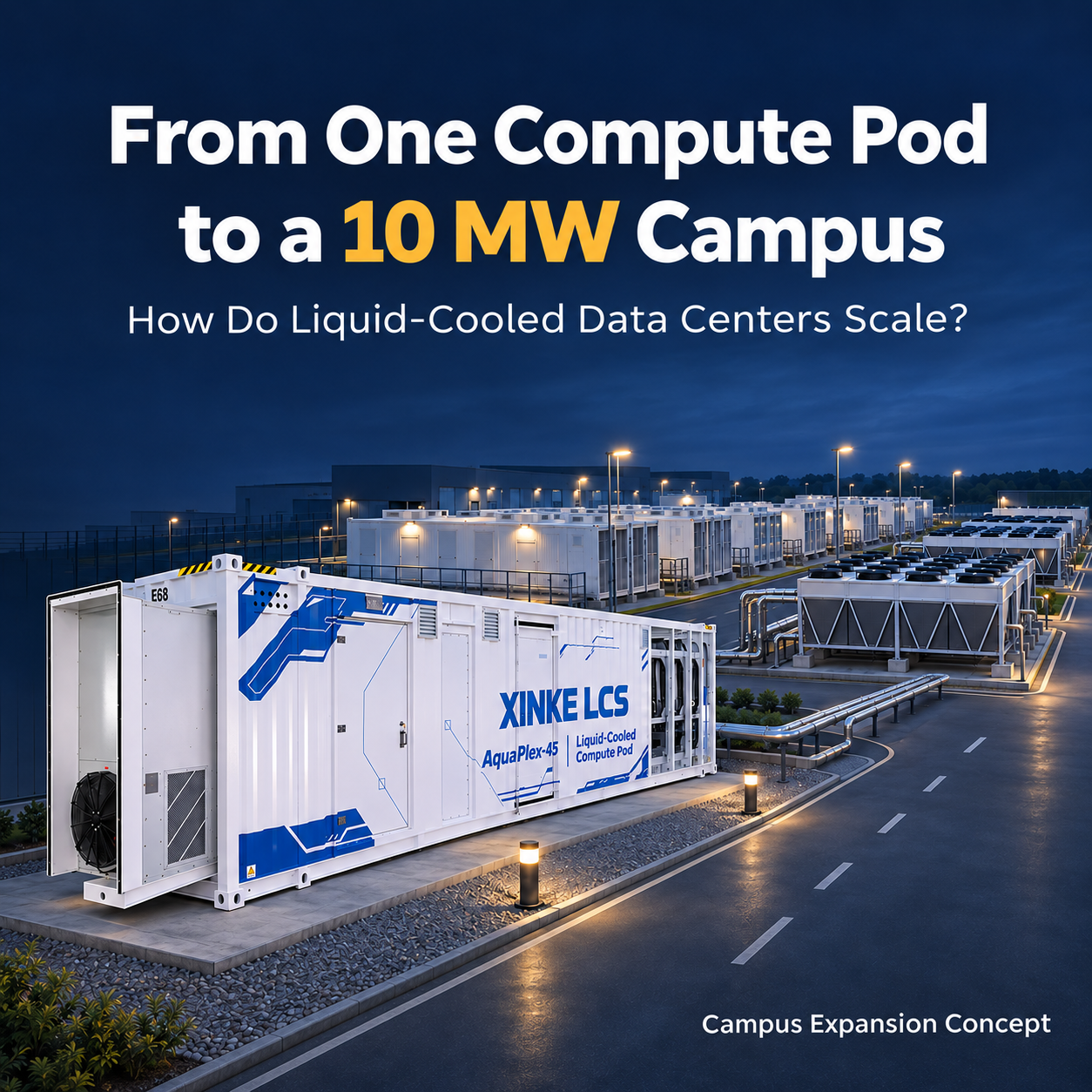
On November 9, 2026, Fourier announced that it would showcase two physical scale models of prefabricated data centers at the SC26 conference. A 1.25 MW model demonstrates the integration of IT space, power supply, and cooling within a compact module, while a 10 MW model illustrates how multiple such modules can be arranged within a single campus to support large-scale computing clusters.
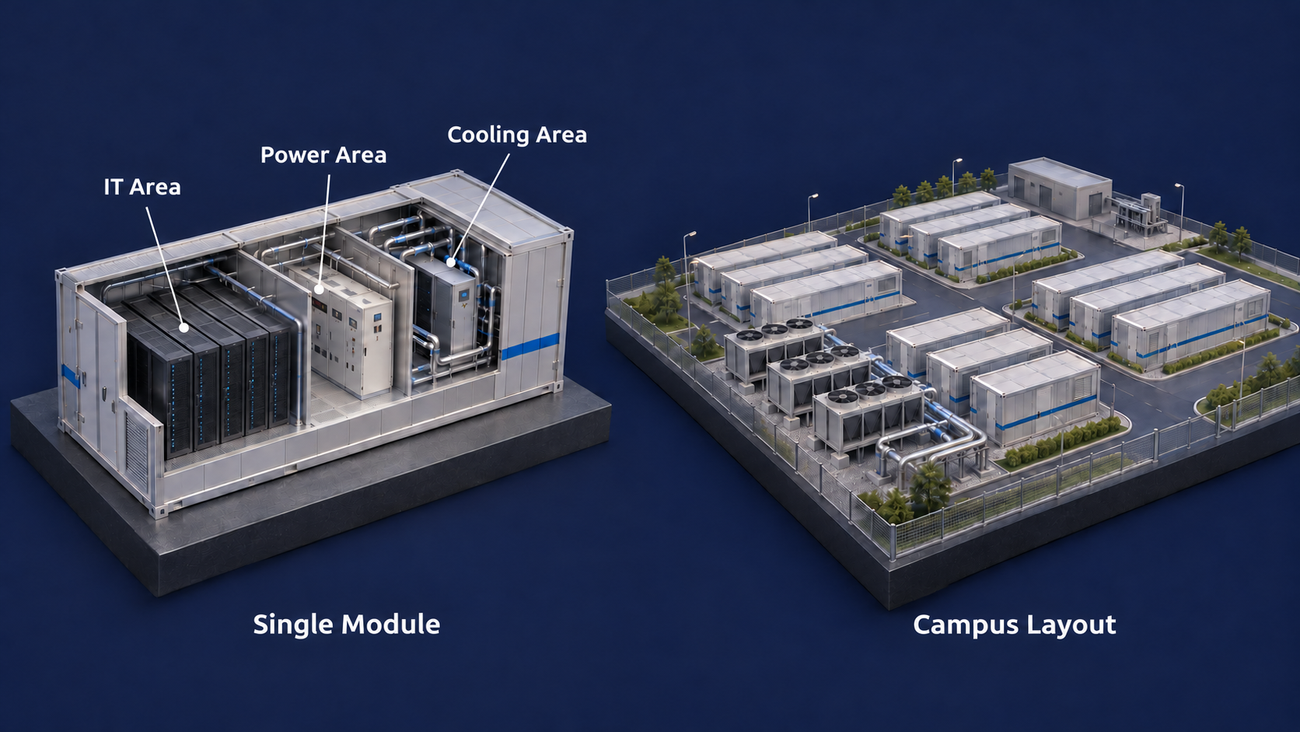
As a project scales up—from an initial computing module to a full-fledged campus—it may undergo multiple rounds of expansion. When the next batch of servers arrives, how can the additional rack space, power capacity, and cooling resources be brought online in perfect synchronization?
From a single computing module to an entire facility, start by calculating the surplus capacity for power and cooling.
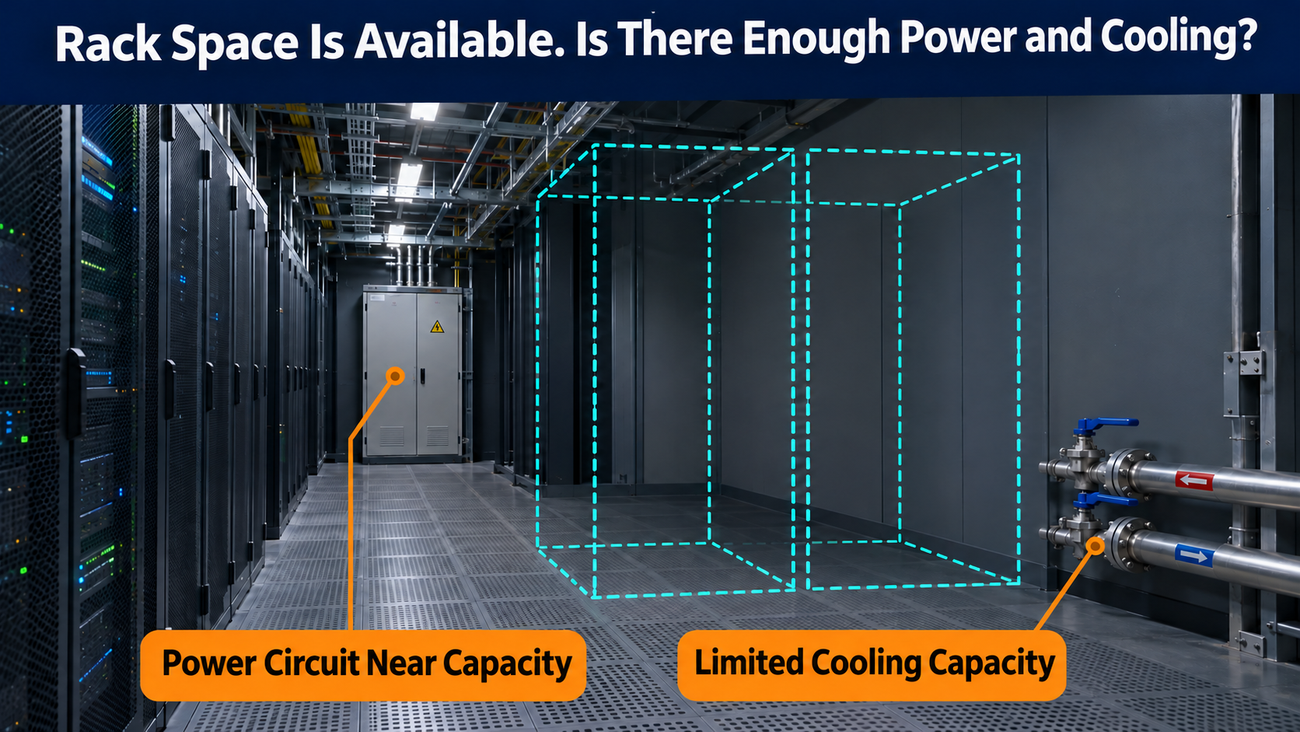
Suppose the first phase of a computing module is already operational, and a second phase—involving the addition of high-density GPU servers—is being planned. While there is still physical space for new server racks, the existing power distribution circuits are nearing their capacity limits, and the cooling plant has little remaining cooling capacity. To bring the new servers online, the power distribution circuits, fluid supply and return piping, and cooling infrastructure must all be capable of supporting the additional load.
According to data from the International Energy Agency, global electricity demand for data centers is projected to grow by 17% by 2025, with electricity consumption for AI-focused data centers expected to surge by 50%. When dealing with phased load growth, project teams can determine during the initial phase which infrastructure components should be built immediately, and which should have space and connection interfaces reserved for future expansion.
The first phase will be put into operation initially, with interfaces reserved for subsequent modules.
Modular deployment allows a project to be broken down into functional units that can be implemented in phases. During the design stage, the installation locations for each module—along with the necessary interfaces for cabling, fluid supply/return, and control—are determined. Once the blueprints are finalized, the factory can proceed with equipment installation, piping prefabrication, electrical wiring, and factory testing, while the site is simultaneously prepared with foundations, external cabling, and main cooling lines.
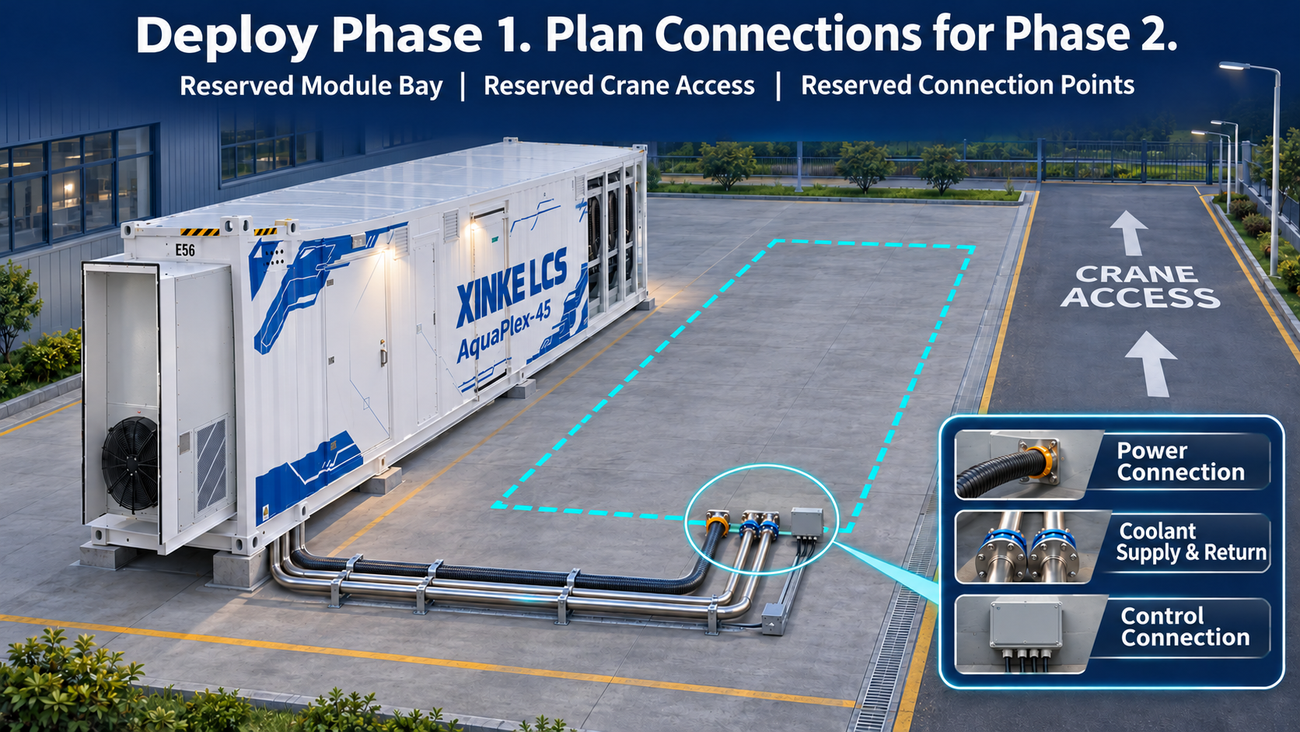
Upon the arrival of the units, the project team carries out the lifting, interface connections, and integrated system commissioning. The initial design can also incorporate provisions for future phases, such as designated spaces for additional units, access paths for lifting equipment, and connection points. When the need for expansion arises, the team can then arrange for the prefabrication and delivery of the specific modules required to support the added load.
Xinke’s LCL solution connects individual functional modules to form a complete data center.
For projects developed in phases, Xinke employs a modular, container-based approach. IT infrastructure, power distribution, backup power, liquid-cooling sources, and operations/maintenance (O&M) facilities are housed in separate, dedicated containers, which are then configured based on specific project loads, site conditions, and operational requirements.
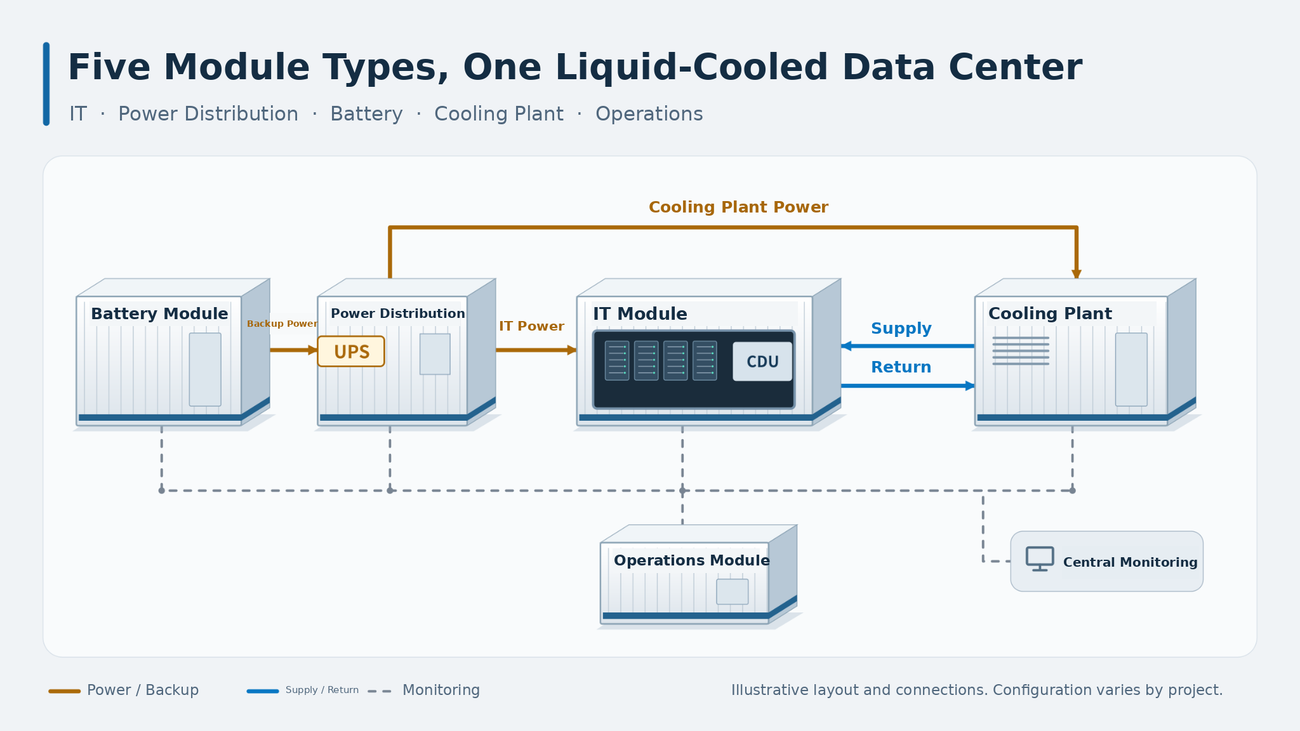
IT containers house server racks, cabling, and the fluid supply and return piping for the racks. Depending on the configuration, they can also integrate a Coolant Distribution Unit (CDU) to provide the necessary environment for the installation and operation of liquid-cooled servers.
Cooling station containers house cooling equipment—such as integrated chiller units—and connect to the liquid-cooling system on the IT side via fluid supply and return piping, facilitating the rejection of heat generated by the servers to the outdoors.
Power distribution containers house power-switching equipment, Uninterruptible Power Supplies (UPS), and other power distribution gear, providing electricity to both the IT equipment and the cooling systems.
Battery containers house backup battery arrays and are equipped with dedicated temperature control and fire-suppression systems. In the event of an external power failure, these batteries work with the UPS to provide backup power to critical loads.
O&M containers provide a dedicated workspace for inspections, commissioning, and repairs; they can be positioned to serve either the IT equipment area or the power distribution and cooling infrastructure area.
Once on-site, the power distribution containers are connected to the IT and cooling station containers via electrical cabling, while the cooling station containers are linked to the IT-side liquid-cooling system through fluid supply and return piping. Operational data from each container is integrated into a centralized monitoring system via control lines. Following comprehensive system commissioning, these individual functional containers form a fully operational, liquid-cooled data center.
How to add units in the next phase depends on which capacity needs to be supplemented.
If the existing power distribution capacity, cooling plant capacity, and piping distribution capabilities are sufficient to cover the additional load, the next phase can prioritize the installation of additional IT modules (IT containers). If power distribution, backup power, or cooling resources are nearing their upper limits, the corresponding functional modules should be added during the same construction phase. When existing, operational systems are involved, the project team must also pre-determine the connection points between the new and legacy systems, as well as the scheduling for construction-related cutovers.
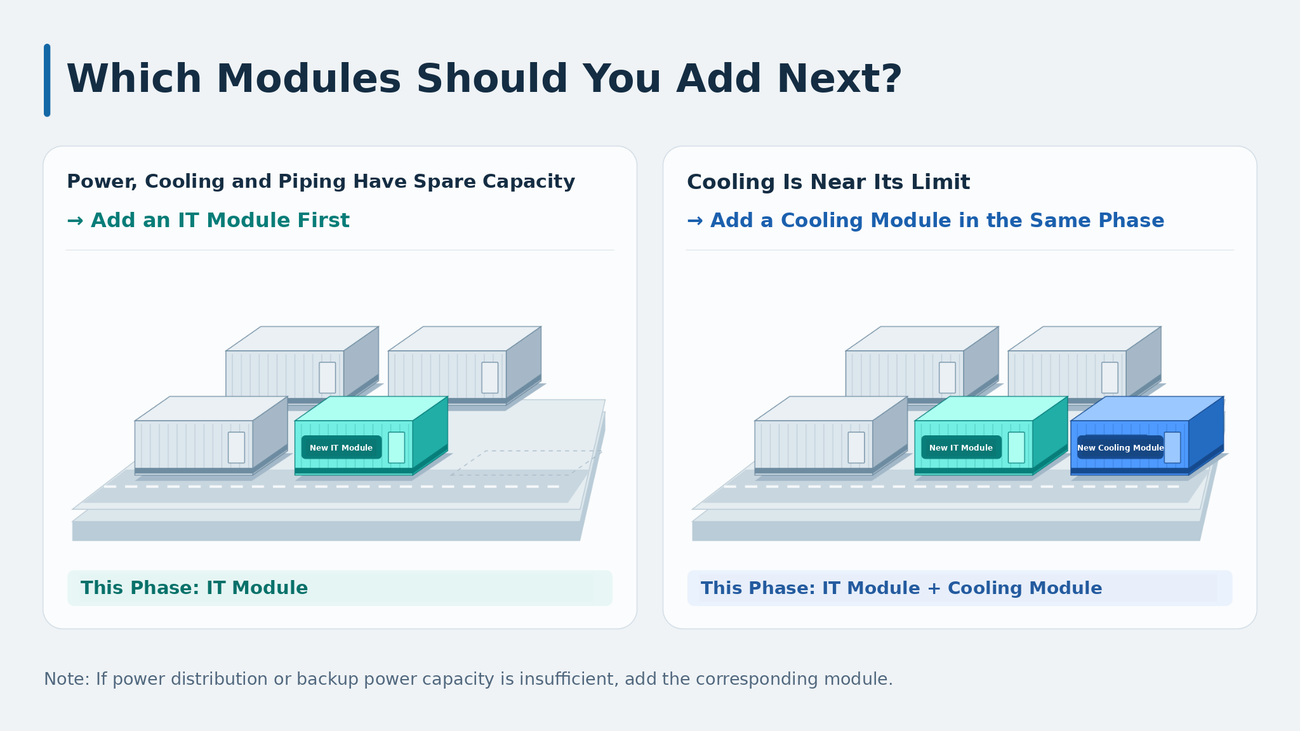
From the initial computing module to a larger-scale campus, Xinke (芯科) can determine the optimal combination of modules and connection methods based on the load requirements for each phase, ensuring that new servers, power distribution infrastructure, and cooling resources are all in place according to a unified commissioning schedule.