

The true starting point for liquid-cooled data centers is not AI.

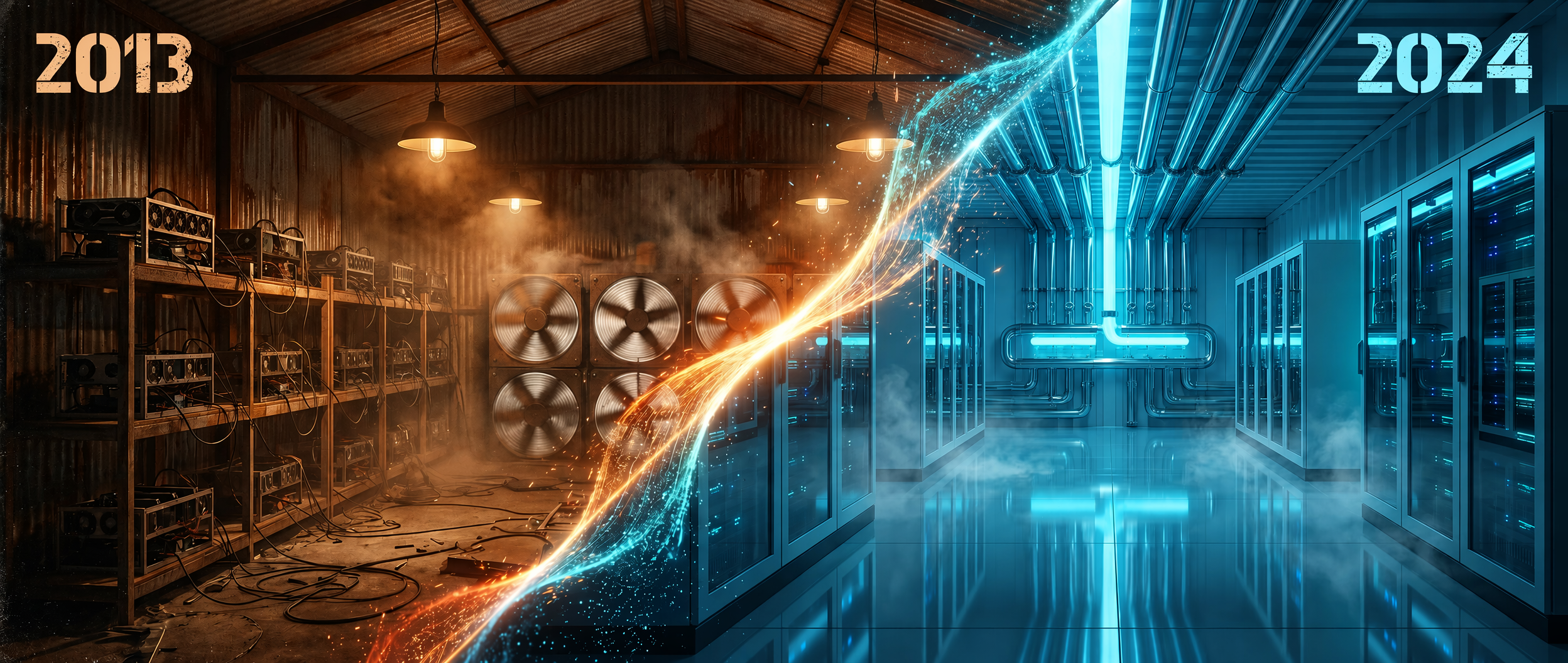
Prologue: The Underrated Starting Point
While the world is discussing how AI is reshaping data centers, few are asking a more fundamental question—where does the primary driving force behind this computing revolution actually come from?
The answer isn’t in Silicon Valley’s GPU clusters, nor in any cloud vendor’s white paper. The spark that truly ignited all of this was lit back in 2009—Bitcoin.
Blockchain and AI data centers—one labeled a “high-energy-consuming” and “sunset industry,” the other a future narrative wildly pursued by the capital market—seem to have nothing in common. But quite the opposite—in the history of data center evolution, blockchain has not played the role of a “transitional species before the AI era,” but rather a genuine Cambrian explosion of life. For the first time, it liberated computing power from the ivory tower, teaching the industry three things: computing power does not have to be geographically bound, computing power can be industrialized, and computing power can force out entirely new cooling paradigms.
The liquid-cooled data centers, modular containers, and PUE values below 1.15 that we are discussing today—the engineering origins of these concepts are all buried in the “primitive” era of blockchain.
The Mining Era – The First Call to Democratize Computing Power
Huaqiangbei, Shenzhen, 2013.
The day Butterfly Labs ASICs arrived in Huaqiangbei, no one realized that a new era was dawning. Before that, the term “data center” belonged to the three major telecom operators, bank disaster recovery centers, and the server clusters of BAT (Baidu, Alibaba, Tencent). Ordinary people never imagined that one day they would become owners of computing power.
ASIC miners changed all that.
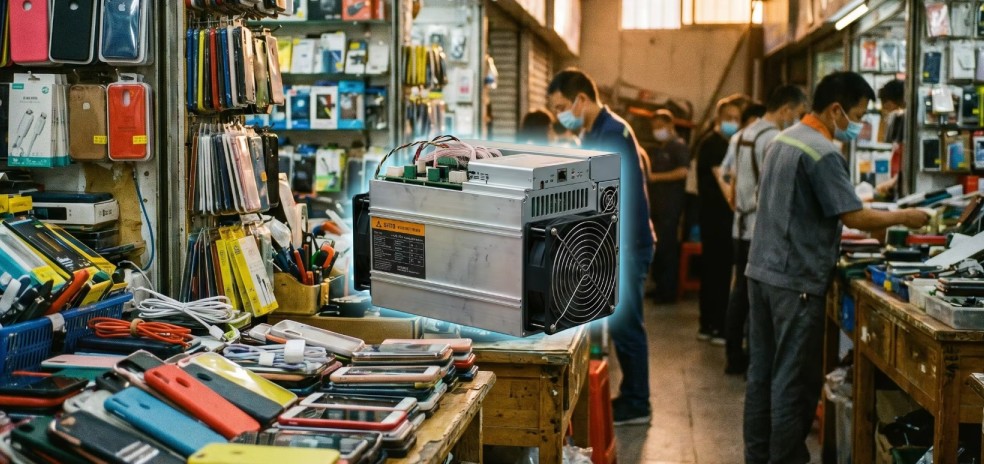
A tiny box, no bigger than the palm of your hand, can generate Bitcoin when plugged in. For the first time, computing power has broken free from the protective shell of IDC data centers and entered residential buildings, warehouses, and even tin shacks next to remote hydroelectric power stations. This is a revolution in the understanding of computing power—it is no longer an infrastructure to be revered, but a digital asset that can be held by individuals.
More importantly, this revolution has brought about significant engineering challenges. The design logic of traditional IDC data centers is “low density, high reliability”—single rack power consumption of 3-5kW, and precision air conditioning for constant temperature and humidity. But mining rigs don’t care about SLA or uptime; they only care about one thing—hashrate density.
A single Antminer S9 consumes 1.3kW, and 20 of them are crammed into a 42U rack. The 3kW design specification is instantly broken, and heat dissipation becomes a nightmare that miners face every day when they open their eyes.
This marks the first time computing power has declared war on cooling technology in such a violent manner.
The cooling arms race – Blockchain has spurred a liquid cooling revolution
If you asked a Bitcoin miner in 2017, “What’s the hardest thing about data center cooling?”
he wouldn’t talk about CFD simulations or mention the ASHRAE standard. He’d point to the roaring, powerful fans and tell you—”Air cooling isn’t enough. It really isn’t enough.”
This is the most hardcore technological legacy of the blockchain era: it was the first industry to push air cooling to its physical limits with large-scale deployment in the real world.
In the early days of mining farms, a single warehouse could hold hundreds of mining machines, with thousands of fans running at full speed simultaneously, generating noise levels exceeding 95 decibels—equivalent to being next to a jet engine. Meanwhile, when the ambient temperature exceeded 35°C, air cooling became virtually ineffective.
Miners were the first to realize this. Around 2016, a grassroots “liquid cooling experiment movement” quietly emerged in the mining industry.
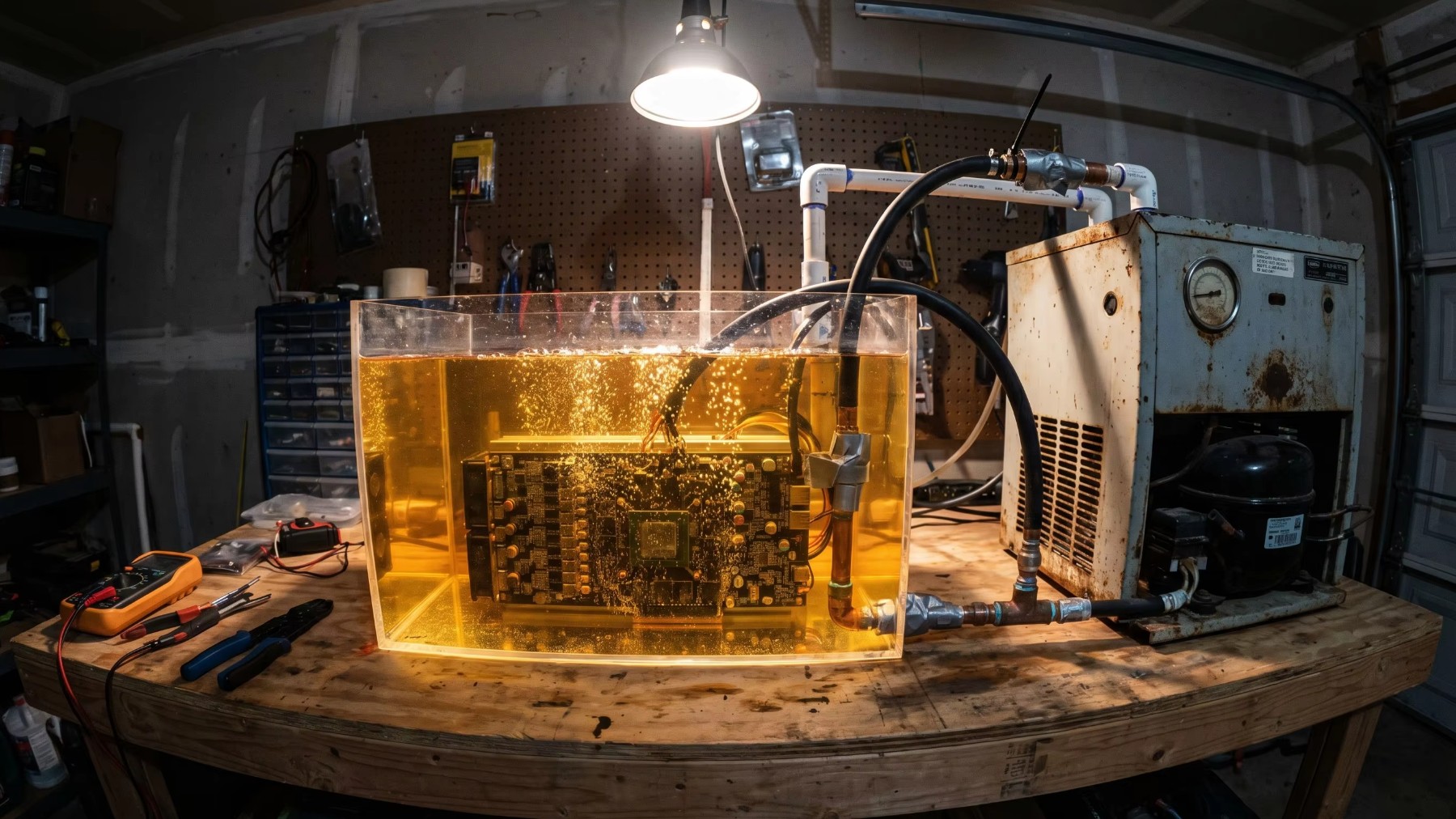
Initially, it was “oil cooling”—immersing the entire mining rig in transformer oil, utilizing the liquid’s specific heat capacity to remove heat. Without the involvement of professional engineers, it was purely a survival strategy employed by mining farm owners. However, maintenance nightmares ensued, leading to the evolution of a second approach—”water cooling plate” modification: modifying the CPU cold block onto the ASIC chip, and using an industrial chiller to create a simple circulation system. Although the PUE was far inferior to today’s sophisticated CDUs, it was a qualitative leap compared to the powerful fans.
This history validates an engineering intuition:
Air cooling has its limitations, liquid cooling does not.
In 2018, Bitmain released its first native water-cooled mining rig, the Antminer S9 Hydro, signifying the formal acceptance of this “grassroots experiment” by the industry chain. More profoundly, the experience accumulated by mining farms in liquid cooling retrofitting directly spurred the underlying paradigm of containerized deployment. Integrating computing power, power supply, and cooling into a standard container, shipping it wherever electricity is cheapest—this is unconventional in the traditional IDC framework, but in the blockchain world, it’s a necessity for survival. Today, when we talk about modular liquid-cooled containers for AI data centers, we are essentially reusing the path pioneered by miners twelve years ago.
From fans to oil cooling, from water-cooled plates to natively liquid-cooled mining rigs, from metal sheds to containers—blockchain has traversed in less than a decade the industrialization path of liquid cooling that traditional data centers failed to achieve in thirty years.
From Blockchain to AI: An Exponential Leap in Computing Power Density
In 2024, NVIDIA released the Blackwell B200. A single chip’s TDP reached 1000W, while the B300 jumped straight to 1400W. The power consumption of a single NVL72 rack exceeded 120kW. Ten years ago, mining farms were struggling with 3kW per rack; the computing power density of the AI era has increased 40-fold.
This isn’t gradual progress; it’s a precipitous leap. But the data center industry didn’t panic in the face of this challenge. Why?
Because blockchain has already paved the most difficult part for them.
Containerized deployment? Miners have been doing that since 2015. High-density liquid cooling? Oil and water cooling systems in mining farms have been running in real-world environments for five years. Modular power supply, remote monitoring, and unattended operation and maintenance—these capabilities that AI data centers pride themselves on today are standard features in mining farms in the blockchain era.
The only difference is the magnitude.
The core cooling goal of mining rigs is to maintain the chip junction temperature below 85°C, with almost no requirement for “temperature difference precision.” However, AI training clusters are different—when 72 GPUs are fully interconnected via NVLink, any temperature inconsistency between any two chips will cause training synchronization delays, directly reducing the cluster’s effective computing power. This is why modern liquid-cooled CDUs need to achieve a water supply temperature difference of <1°C—this isn’t a technical gimmick, but a rigid requirement.
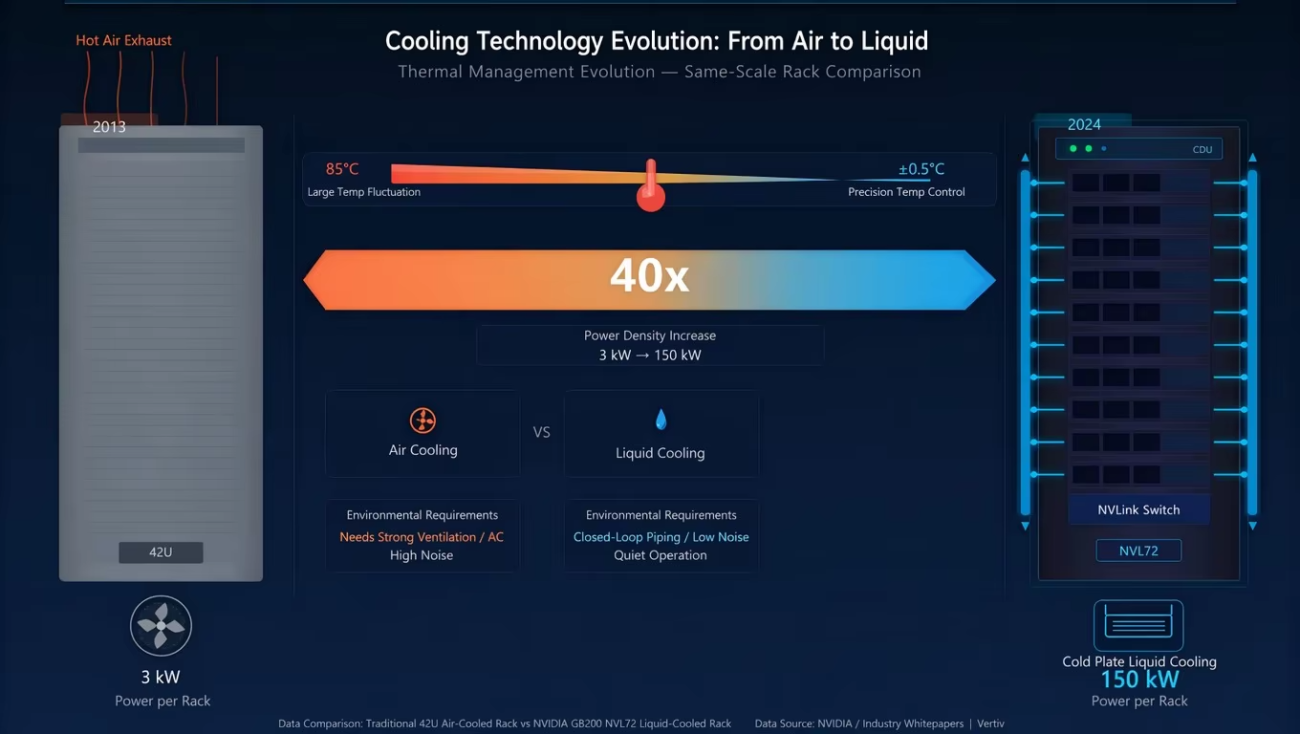
AI didn’t overturn the blockchain’s heat dissipation model; instead, it raised higher-level questions based on it:
• Single-cabinet power consumption: from 3kW → 150kW
• Heat dissipation medium: from high-power fans → liquid cooling plates (single-phase/two-phase)
• Temperature difference control: from “just don’t burn out” → water supply temperature ±0.5℃
• Deployment form: from metal sheds → fully loaded liquid-cooled containers
• Energy efficiency indicators: from “the lower the electricity cost, the better” → PUE < 1.15 + WUE simultaneously meeting standards
Blockchain is the “Easy Mode player” in this game, validating the feasibility of liquid cooling and containerization through massive trial and error. AI, taking over the baton, needs to make sophisticated upgrades to this engineering legacy.
The same factory building, two eras
In 2023, somewhere in Sichuan Province.
A once bustling Bitcoin mining farm has been quiet for two years. The exterior of the tin-roofed building remains the same, but everything inside has changed—the shelves that used to hold Antminer mining rigs are now filled with NVIDIA H100 processors worth hundreds of thousands of yuan. The pipes no longer flow with Bitcoin hash values, but with training parameters for large language models.
This is not an isolated case.
From Sichuan to Inner Mongolia, from Yunnan to Xinjiang, a large number of former cryptocurrency mining farms are undergoing a fundamental restructuring. The power supply facilities, cooling systems, and storage spaces built for “mining” are now being reused as AI computing centers. The physical space remains the same, but the mission has been upgraded from “producing cryptocurrency” to “training large-scale models.”
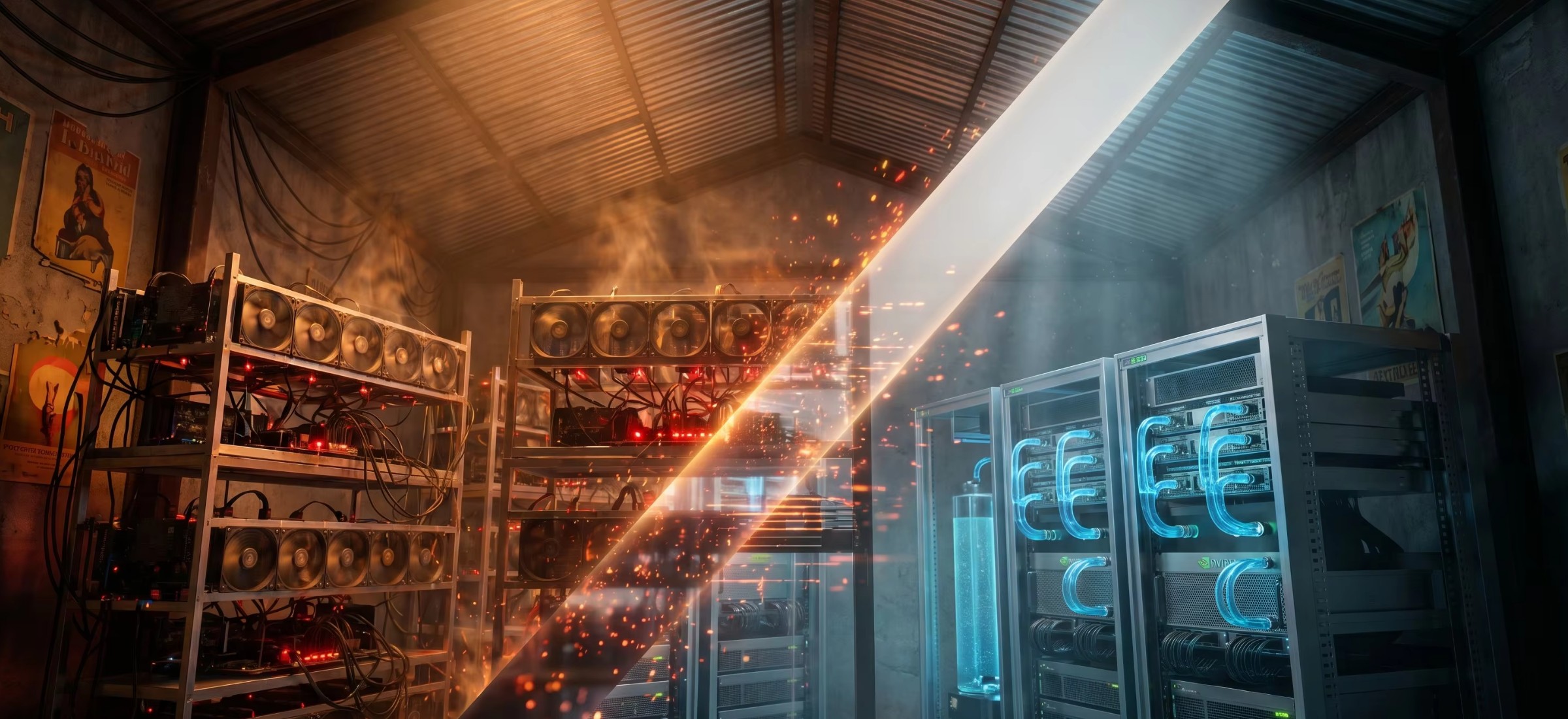
This transformation is feasible precisely because of the foundation laid in the blockchain era. From the outset, mining farms have not been viewed as “buildings,” but rather as “equipment providers”—power supply, cooling, and network are all modular, allowing for easy disassembly, replacement, and upgrading. When a mining farm decides to transform into an AI-driven facility, it doesn’t need to be completely rebuilt; it only needs to do three things: replace servers, upgrade cooling, and adjust power supply redundancy. From order confirmation to equipment deployment, the cycle is as short as a week.
The source of this modular capability lies precisely in the trials and tribulations miners have learned through oil-cooling leaks, downtime relocations, and containerized equipment testing. Forced to relocate due to fluctuating electricity prices, they inadvertently developed an insect-like resilience to “dismantle and rebuild.” Today, when AI companies need to rapidly deploy globally, they find this modular solution to be the optimal solution.
This is the deepest legacy that blockchain leaves for AI: not a specific technology, but a foundational capability of “disassembling at any time, building anywhere, and changing as needed.” The same factory building has run both Bitcoin and large-scale models; the same cooling system has served both ASICs and GPUs. Two seemingly unrelated eras have achieved seamless integration in the same physical space.
The flame will never die
Back to the original question: What is the number one driver of data center evolution?
Not Moore’s Law. Not cloud computing. Not NVIDIA.
It’s blockchain.
They are the Chinese miners who build tin houses next to hydropower stations in Sichuan, beside natural gas fields in Kazakhstan, and on the Ethiopian plateau. They do not have PhD degrees and cannot write white papers, but they spent ten years and used countless painful lessons from board burnouts, shutdowns, and liquid cooling oil leaks to deliver a message to the entire industry that is still reverberating today:
Computing power should not be locked up in one place. It has the right to move, it has the right to cool itself, it has the right to become more efficient.
From the roar of the mining machine fan to the silent operation of the AI training cluster; from the home-made steelmaking to transform the CPU water block, to the precision CDU with a water supply temperature difference of ±0.5°C – this is not only an evolution of technology, but also a cognitive revolution about “computing power sovereignty”.
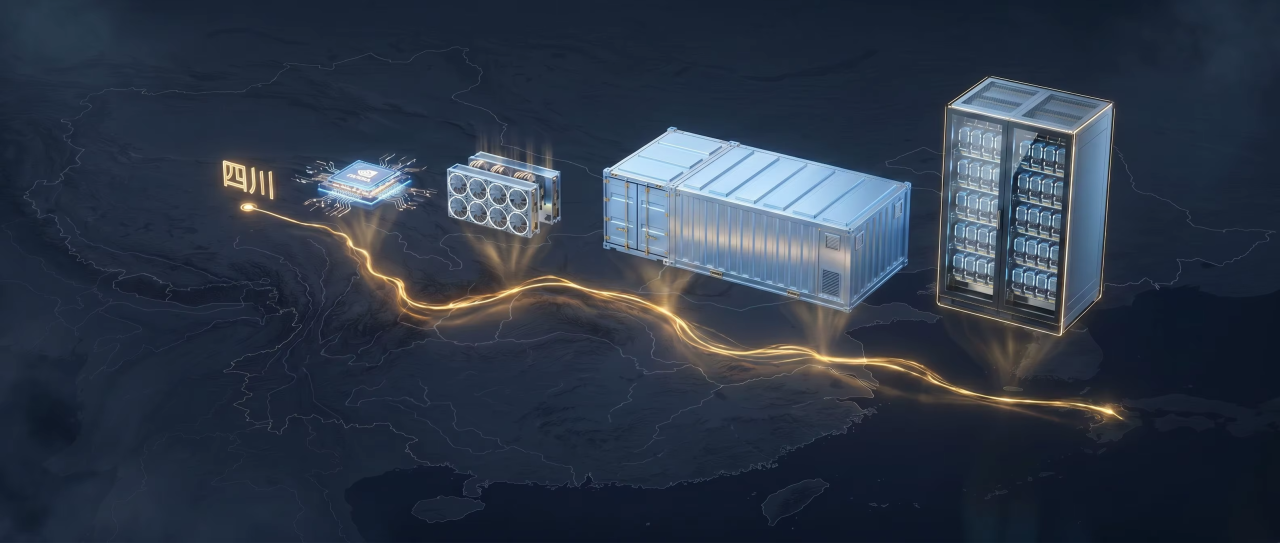
Three things blockchain taught the industry that remain relevant today:
1. Computing power = asset. Only by owning it can you truly understand it.
2. Computing power = migrant. It chases electricity, cooling, and lower costs. Make computing power flow, not stagnate it.
3. Computing power = thermodynamic challenge. Air cooling has its limits, liquid cooling doesn’t. You’re not just designing a computing system, you’re designing a thermal management system.
This is the legacy blockchain left for the AI era. It hasn’t disappeared; it’s just changed its appearance, continuing to drive this Cambrian explosion of computing power.
The flame remains. It’s just burning more quietly.
This article was written by Xinke LCS, a company specializing in providing one-stop liquid cooling infrastructure solutions for HPC and AI data centers.