

Silicon Labs: Taming a “Computing Power Beast” in a 45-foot Container – Unveiling the GB300 NVL72 Supernode Mobile Liquid-Cooled Data Center

Introduction: A Revolution in Computing Infrastructure
With AI model parameters growing exponentially by trillions, traditional civil engineering data centers seem to be facing a “space crisis.”
What if I told you that future national-level computing centers would no longer require land acquisition, piling, or building construction, but rather could unleash hundreds of EFLOPS of intelligent computing power within just a few standard shipping containers, like assembling building blocks?
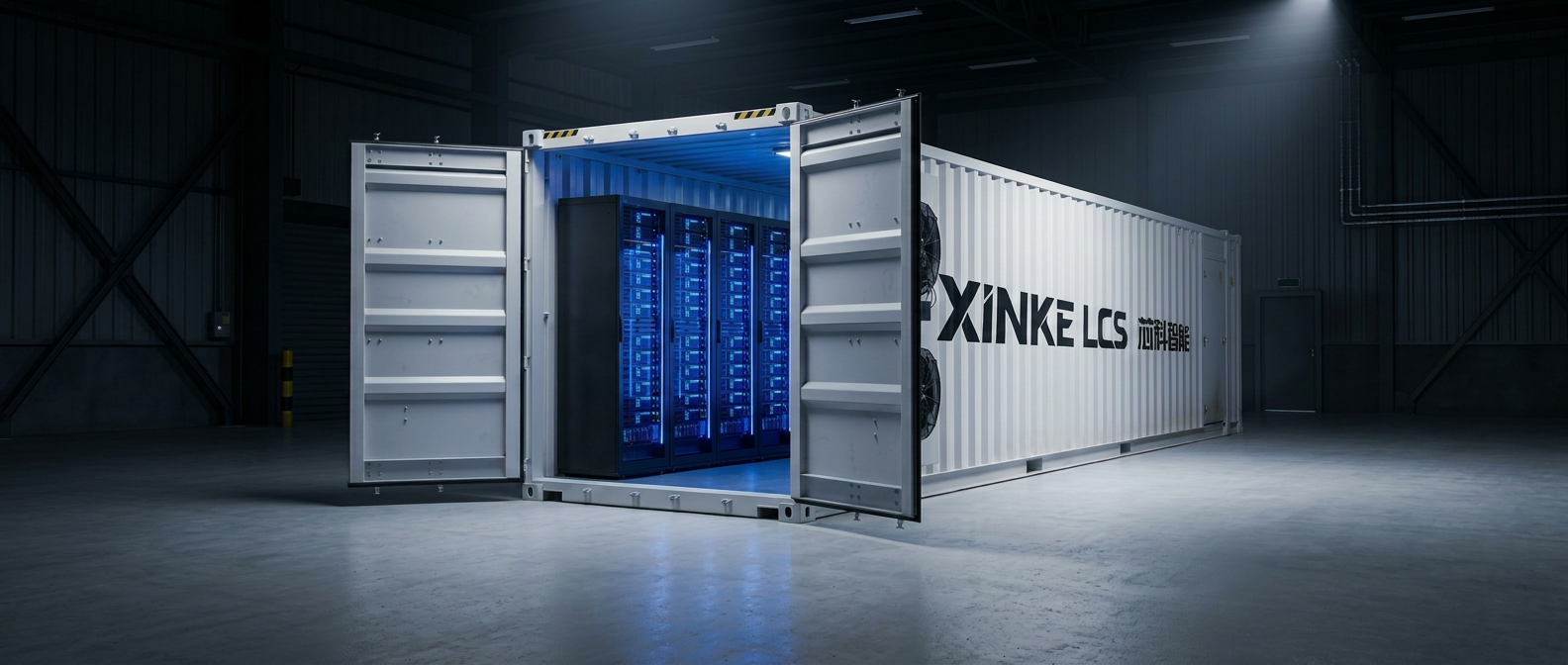
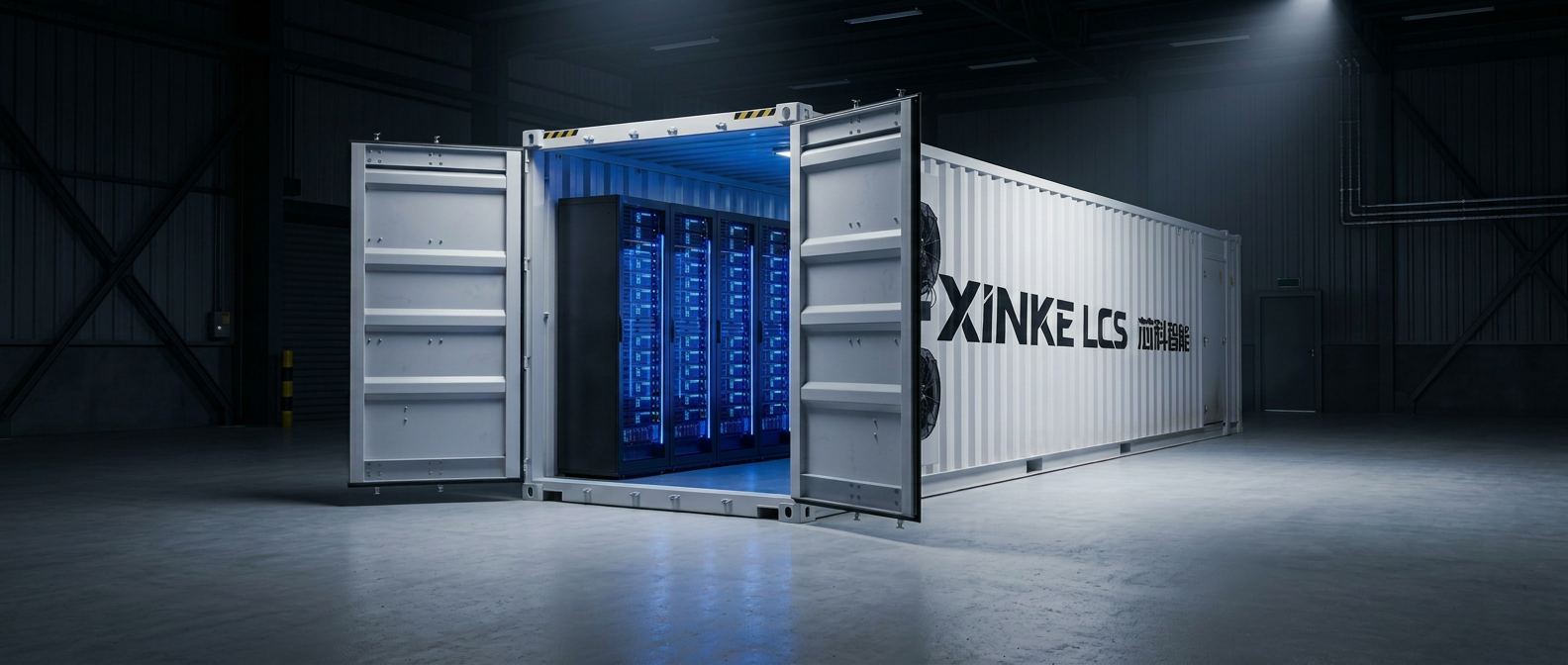
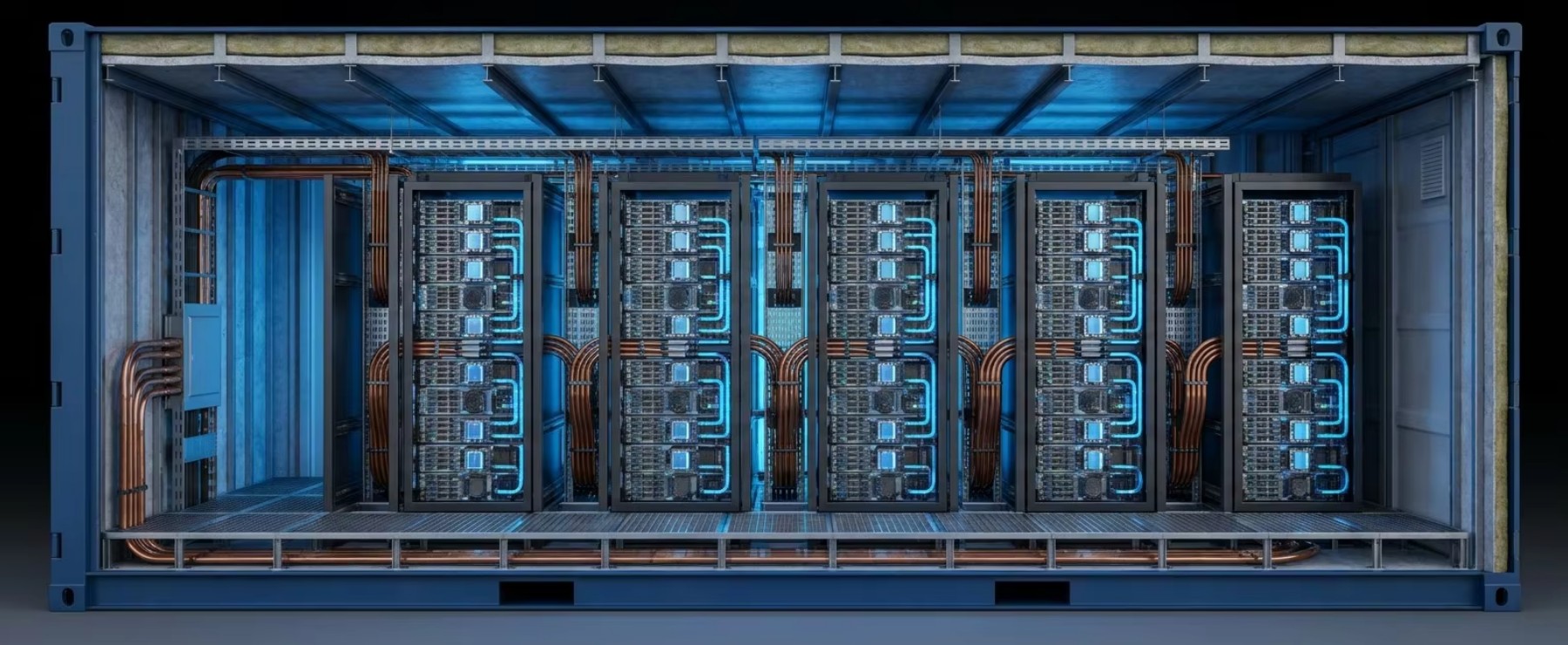
Silicon Intelligence is turning this vision into reality. We’ve launched an integration project—natively deploying an NVIDIA GB300 NVL72 supernode system within a standard 45-foot shipping container. Each container integrates 4-6 supernodes for easy one-time deployment; a single container can be powered on and deployed immediately upon placement.
Why must GB300 NVL72 be chosen?
Within the precious space of a shipping container, we had to choose the most powerful “heart” per unit volume.
The NVIDIA GB300 NVL72 (Blackwell Ultra platform) represents the pinnacle of single-rack computing power. Each supernode is interconnected via NVLink, integrating 72 B300 GPUs and 36 Grace CPUs, providing up to 1.1 EFLOPS of FP4 inference performance.
Silicon Intelligent’s first challenge was how to house this “computing behemoth” within the container. A single NVL72 rack consumes approximately 120kW-132kW and weighs over 1.36 tons. In traditional air-cooled data centers, this is a difficult-to-tame hotspot; however, in Silicon Intelligent’s vision, it is the most efficient computing unit.
Spatial Magic: Performing a ritual within a snail shell inside a 45-foot box
It is impossible to fit 4-6 sets of GB300 NVL72 nodes in a standard 45-foot container using the traditional flat-laying method.
Silicon Motion offers two differentiated designs for its container integration solutions to meet the deployment needs of different customers:
● Direct Installation of Supernode Cabinets: Supports direct installation of supernode cabinets inside the container, enabling native and rapid deployment of computing power.
● Modular Shared Air/Liquid Rack Mode: Provides a universal rack completely consistent with the supernode design. This rack supports shared air and liquid systems, allowing users to build and configure storage, switches, power supplies, and other components according to their actual business needs, achieving a fully customized supernode ecosystem configuration.
Power source: Building a “substation” inside a shipping container
If the GPU is the brain, then electricity is the blood. With a single node power consumption of 132kW, a container with six supernodes would have a total IT load approaching 800kW (or even higher).
This means that a 45-foot “iron box” in operation will achieve an astonishing power density per unit area. To adapt to different power standards worldwide, Silicon Labs offers two core power configurations for customers to choose from:
1. DC Power Configuration: Integrates high-voltage direct current (HVDC) and a full bus power supply architecture, pursuing ultimate energy conversion efficiency.
2. AC Power Configuration: Supports standard AC power input, ensuring perfect compatibility with existing data center infrastructure.
Extreme Cooling Challenge: Conquering the Heat Dissipation Threshold of “120kW+”
Electricity comes in as money, but goes out as heat. Conventional air conditioning is completely ineffective at such high power densities. Liquid cooling is the only solution.
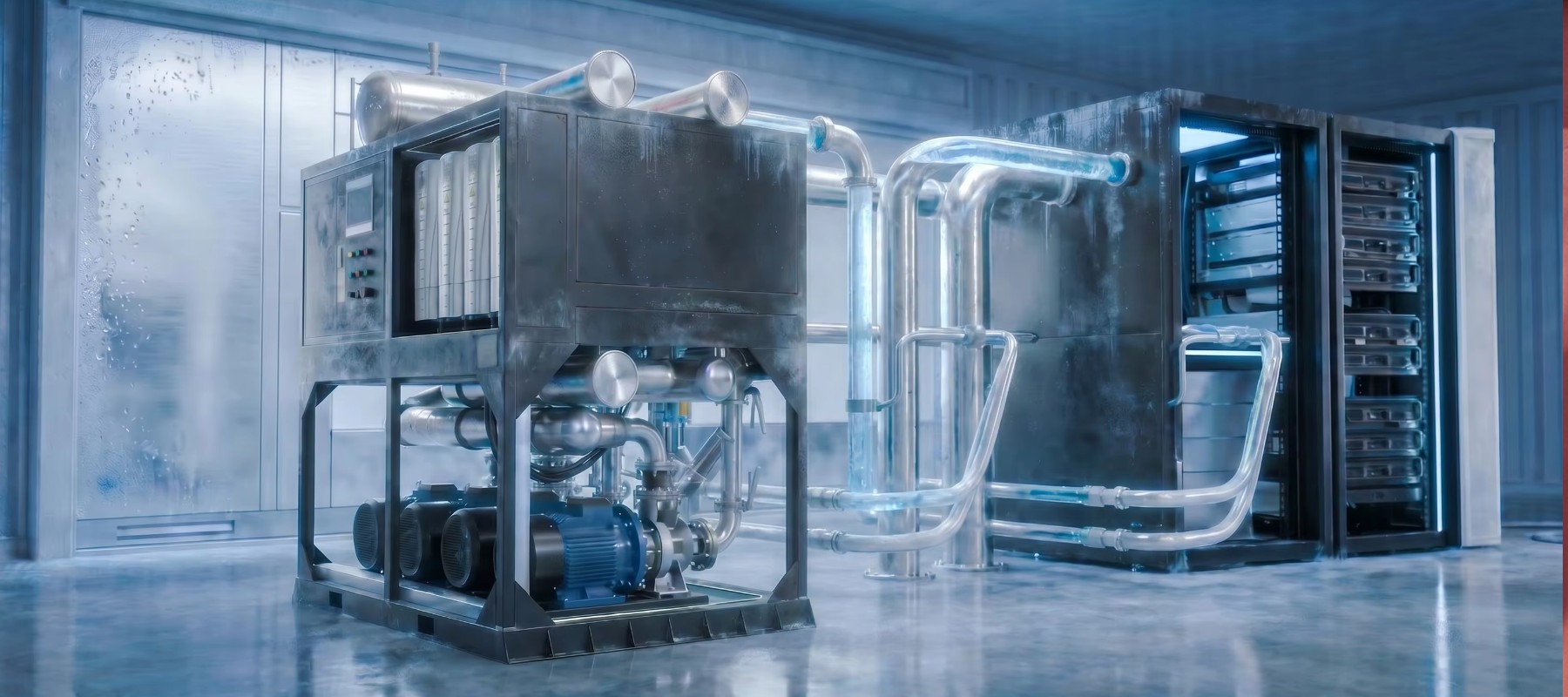
In order to support the efficient operation of GB300 NVL72, Xinke Intelligent has developed a dedicated full-chain liquid cooling solution. It can automatically adjust and distribute the cooling capacity of 4-6 cabinets from full load operation to single rack. Thus, the PUE can be lowered.
We employed a hybrid cooling strategy, primarily using liquid cooling on the cold plate, supplemented by gate-level/auxiliary air cooling.
Through manifolds and quick-connect fittings, coolant is precisely delivered to the cold plate of each B300 GPU and Grace CPU, dissipating up to 1400W of heat per unit.
Why go to such extremes? The strategic significance of mobile computing power.
Silicon Labs has invested heavily in developing this product because of its unparalleled advantages:
Rapid Delivery: Traditional data center construction cycles are measured in years, while Silicon Labs’ containerized computing centers are prefabricated in the factory and plug-and-play. On-site connection to water, electricity, and the internet is all that’s needed, reducing commissioning time from months to days.
Flexible Deployment: Whether for polar research, deep-sea exploration, or emergency response to sudden disasters, top-tier global computing power can reach anywhere trucks, trains, or ships can go.
East-to-West Data Transfer: These high-density computing units can be directly deployed in energy-rich western regions, transmitting “intelligence” eastward via high-speed fiber optic cables, avoiding power loss over long distances.
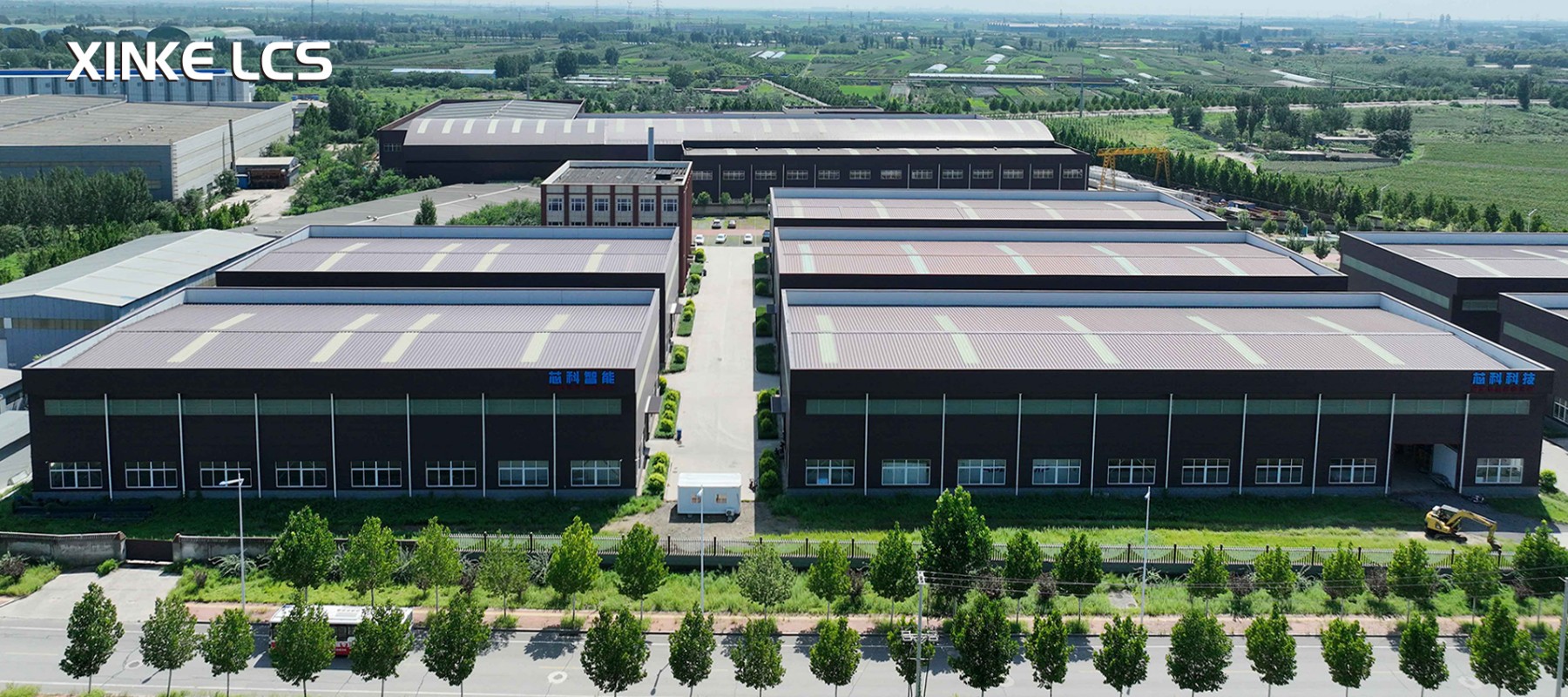
Full-scene coverage: From factory workshops to scientific research hubs
Silicon Labs’ containerized liquid cooling solution is not only a pinnacle of technological integration, but also designed to meet increasingly diverse application needs.
● Diverse Customer Base: We serve large equipment manufacturing enterprises, supporting them in establishing private databases and AI models to assist production; and we serve AI model development companies, addressing their concerns about the high costs and data security risks associated with renting public clouds.
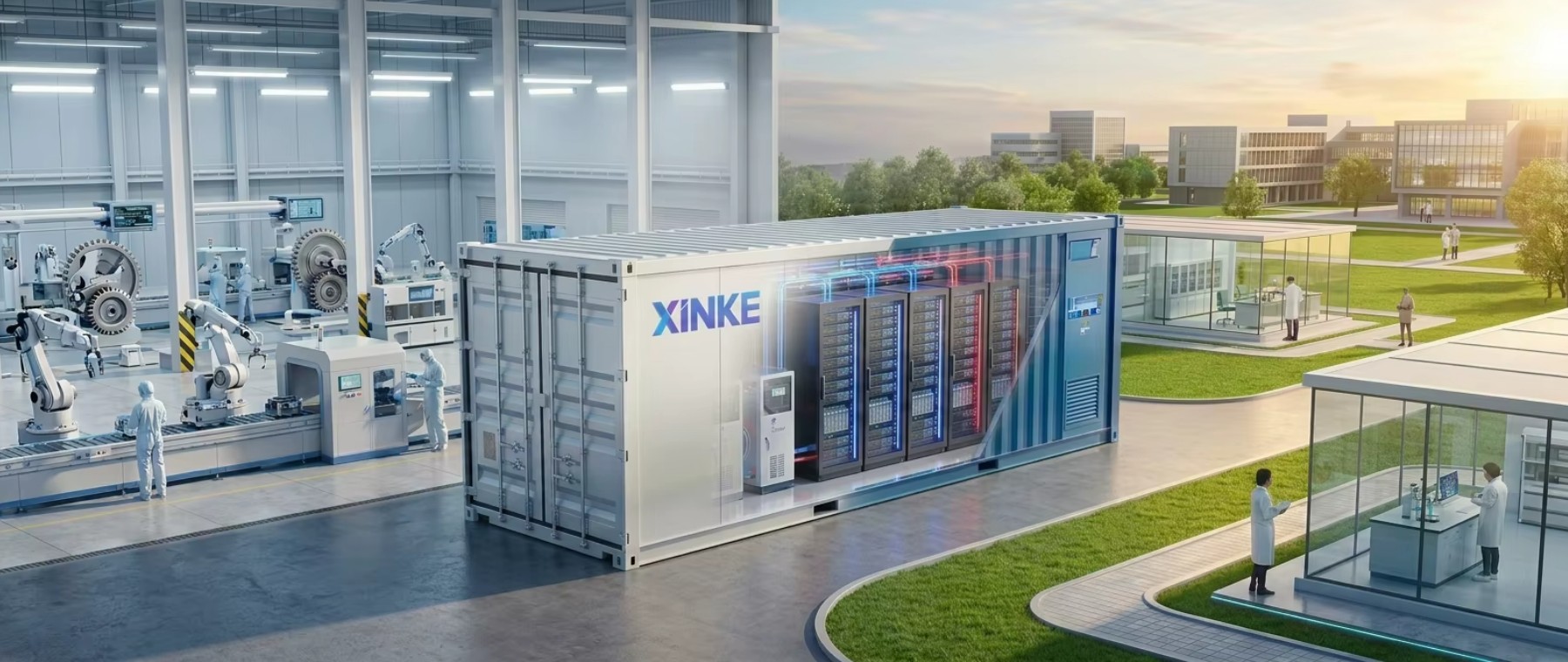
● Wide range of applications: From the high-performance computing needs of universities and research institutions to the local deployment of AI inference servers for software companies (such as AI assistants for legal advisors); from the digital transformation of large manufacturing enterprises to data-intensive analysis in the aerospace and new materials fields, this solution can provide a solid computing foundation.
Conclusion
Silicon Labs isn’t just putting a few computers in a shipping container; it’s redefining the delivery model of “computing power as a service.”
When the standardized 45-foot container door slowly opens, what’s revealed is no longer cargo, but a cluster of NVIDIA GB300 NVL72 supernodes—the pinnacle of computing power currently available. A new era of efficient, flexible, and green computing power has arrived.
No skyscrapers needed, yet computing power at your fingertips.
Silicon Labs, born to run AI.
Silicon Labs, keeping your devices cool at all times!
Note: The specific technical parameters of NVIDIA GB300 NVL72 mentioned in this article are from Supermicro, ASUS and industry analysis reports. Silicon Labs has carried out engineering integration and R&D based on these.